IN PROGRESS – NOT FOR PUBLICATION
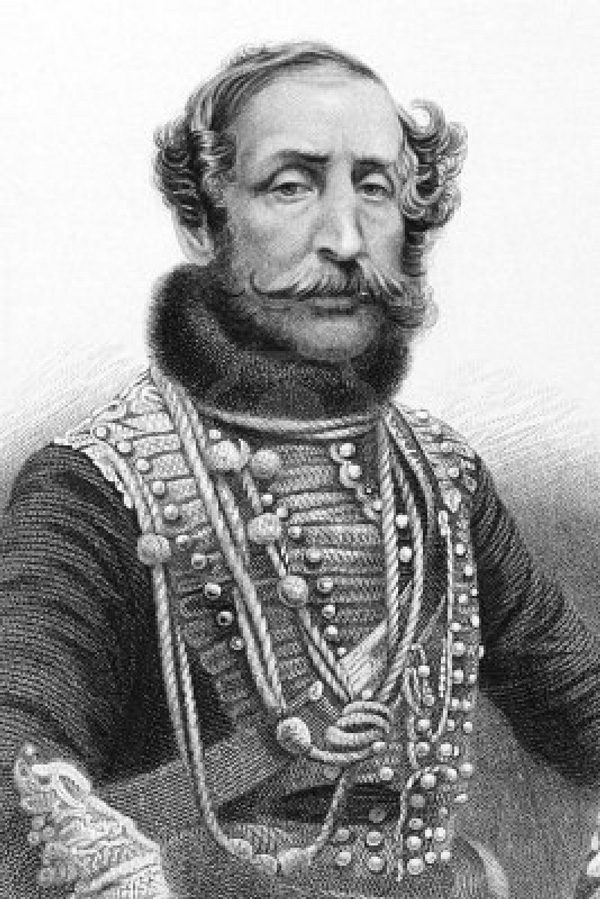
Born on the 16th of October 1797 at Hambleden Manor, Buckinghamshire, the son of Robert Brudenell and Penelope Anne Cooke. The couple had married against his family's wishes.
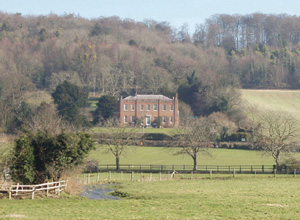
His father, a keen cricketer with the MCC, became the 6th Earl of Cardigan in 1811 (on the death of his uncle) and was at one time Equerry to Queen Charlotte (the wife of George the Third). His wife was Lady of the Bedchamber to the Queen. On his accession, the family moved to Deene Park in Northamptonshire.
Their first child had died in infancy, and James Brudenell passed his childhood among seven sisters. It was the youngest of these, Anne, who later married and had six children with Lord Bingham, afterwards the Earl of Lucan [commander of the cavalry division in the Crimea].
James Brudenell was educated at Harrow School, 1811 – 1813, and at Christ Church College Oxford, 1813 – 1818.
[PB: The School Register summarises his career.]
Brudenell, James Thomas, son of Robert Brudenell, Esq., 6th Earl of Cardigan, 1811. Lord Brudenell, 1811; left 1811-13. Ch. Ch. Oxf.; M.P. Marlborough, 1818-29; Fowey, 1829-32; N. Northants., 1832-7; succ. as 7th Earl, 1837; joined 8th Hussars, 1824; Lieut.-Col. 15th Hussars, 1832, which he left in consequence of a personal quarrel; Lieut.-Col. 11th Hussars, 1836; Maj.-Gen. 1854; Lieut.-Gen. 1861; served in the Crimea and led the charge of the Light Brigade at Balaclava; Inspector-Gen, of Cavalry, 1856-60; K.C.B.; tried by the House of Lords for wounding Capt. Tuckett in a duel on Wimbledon Common, Sept. 10th, 1841, but acquitted on technical grounds. KILLED by a fall from his horse, March 27th, 1868.
[R. Courtenay Welch et al, The Harrow School Register, 1800 – 1901, 3rd edition, 1911. Online at Project Gutenberg: archive.org/details/harrowschoolregi00harruoft (accessed 6.3.2016).]
In February 1819 he entered Parliament (under age) as MP for the pocket borough of Marlborough. He was returned unopposed in 1820, and continued to sit for Marlborough until 1829.
At this time the small town of Marlborough returned two MPs, though no more than twelve people were entitled to vote. Both seats were in effect in the gift of Brudenell's first cousin, local landowner Charles Brudenell-Bruce, Earl of Ailesbury (1773-1856). Robert Brudenell, James's father, had himself been MP for Marlborough 1797 – 1802, but gave it up because he found attendance "inconvenient and fatiguing". James himself behaved in much the same way. For example, there is no record of any vote or speech in his first Parliament.
Sources:
http://www.historyofparliamentonline.org/volume/1790-1820/constituencies/marlborough
http://www.historyofparliamentonline.org/volume/1820-1832/member/brudenell-james-1797-1868
http://www.historyofparliamentonline.org/volume/1790-1820/member/brudenell-james-thomas-1797-1868.
(All accessed 5.5.12.)
[PB]
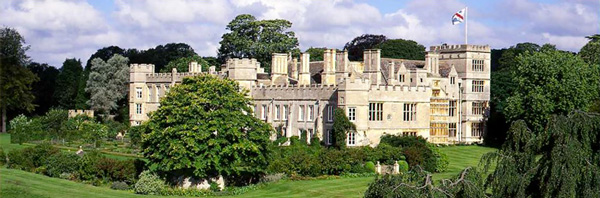
Receiving permission to raise a (Deene) troop of the Northamptonshire Yeomanry, he was commissioned as its first captain (1819).
Defying family opposition (his father wished him to remain in the political field) he was (at the age of 26) gazetted as a Cornet in the 8th Hussars on the 6th of May 1824, became Lieutenant on the 13th of January 1825, Captain on the 9th of June 1826, Major 1830, and Lt-Colonel (half-pay) 1830.
In 1823 he had become involved with Elizabeth Jane Henrietta Johnstone (nee Tollemache, born 1797, the daughter of Admiral John Richard Delap Tollemache and Lady Elizabeth Stratford) who had parted from her husband, Lt-Colonel Christian Frederick Charles Alexander James Johnstone of Hilton. After a divorce action (c. April 1826) they married at the church of St Nicholas with St Mary Magdalene at Chiswick on the 13th [19th?] of June 1826.
CHECK AND USE PARTS OF FOLLOWING? FOR "crim-con" see explanation below.
http://www.historyofparliamentonline.org/volume/1820-1832/member/brudenell-james-1797-1868
"Early that year [1824?], having begun an affair with Mrs Elizabeth Johnstone, he challenged her cousin Gilbert John Heathcote to a duel in defence of his sister's honour. Heathcote did not fire and Lady Derby observed that 'after Gill had received Lord Brudenell's shot for maltreating his sister, he ought to have said, "Now, my lord, I must beg you to receive my shot for your conduct to my cousin".' Johnstone brought a case of crim. con. against Brudenell, who was ordered to pay £1,000 in compensation, but married her two years later, after she had obtained a divorce.6 "
PB: This church is also associated with another Charger, 416 Sergeant Henry Joy, 17th Lancers, buried there in 1893.
On the 2nd of August 1829 he purchased a majority in the 8th Hussars, and on the 3rd of December of that same year a lieutenant-colonelcy for, it is said, a cost of between £3,000 and £4,000, and went on to half-pay on the 31st of March 1831.
Becoming again involved in politics, in which a leading issue of the time were the Corn Laws, he won a seat in the new constituency of Northamptonshire North (having previously in 1828 resigned that of Marlborough).
Around this time he and his wife leased Brooksby Hall, in Leicestershire, as a hunting box – it became a venue for the Quorn Hunt to meet.
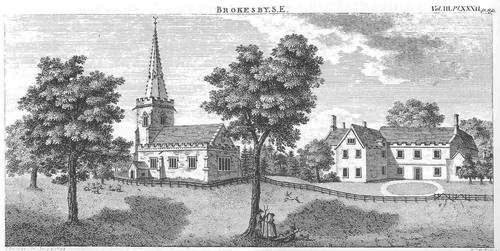
According to the website www.parksandgardens.ac.uk (accessed 8.5.12):
"In 1831, his charger, Dandy, collapsed and died at Brooksby and was buried under a large elm tree on the lawn. There is a memorial stone in the west wall of the Hall."
[CHECK POLITICAL CAREER:
http://www.historyofparliamentonline.org/volume/1820-1832/member/brudenell-james-1797-1868
- says his seat at Marlborough was lost in 1829 because
- Fowey 1830-1832 (lost his seat when F was disfranchised
- Northamptonshire North 1832-1837
...voted against [Irish] relief, 21 Apr., 10 May, and the related Irish franchise bill, 26 Apr.
He was listed by Planta, the Wellington ministry's patronage secretary, as 'opposed to the principle' of the [Catholic] emancipation bill, but he evidently intended to support the measure because a few weeks later he was turned out by the staunchly anti-Catholic Ailesbury in favour of William John Bankes.11
Soon to be settled at Brooksby, he returned to the House in February 1830, having purchased a seat for Fowey.12 He voted against the enfranchisement of Birmingham, Leeds and Manchester, 23 Feb., Jewish emancipation, 17 May, and abolition of the death penalty for forgery, 7 June.
[CHECK HIS MILITARY AND POLITICAL CAREER against this source:
http://www.historyofparliamentonline.org/volume/1820-1832/member/brudenell-james-1797-1868
Offices Held
Capt. Northants. yeoman cav. 1819
Cornet 8 Drag. 1824, lt. 1825, capt. 1826, maj. 1830; lt.-col. (half-pay) 1830;
Lt.-col. 15 Drag. 1832; half-pay 1834;
Lt.-col. 11 Drag. 1836, brevet col. 1846; maj.-gen. 1854;
Inspector-gen. of cav. 1855-60;
Col. 5 Drag. Gds. 1859-60;
Col. 11 Drag. 1860-d.; lt.-gen. 1861.
SAY SOMETHING ABOUT HAVING SERVED IRELAND?
"Gaining rapid promotion in the army, probably through his connection with the duke of York, the commander-in-chief, and certainly by purchase, he served in Ireland from 1825 to 1827."
"...Without his father's approval, he accepted his first commission in the army, 6 May, and was therefore obliged to vacate his seat. He was re-elected, 18 June 1824, but later wrote that '[I] neglected much of my parliamentary duties for the purpose of doing orderly duty as a subaltern officer in the 8th Hussars'.7 "
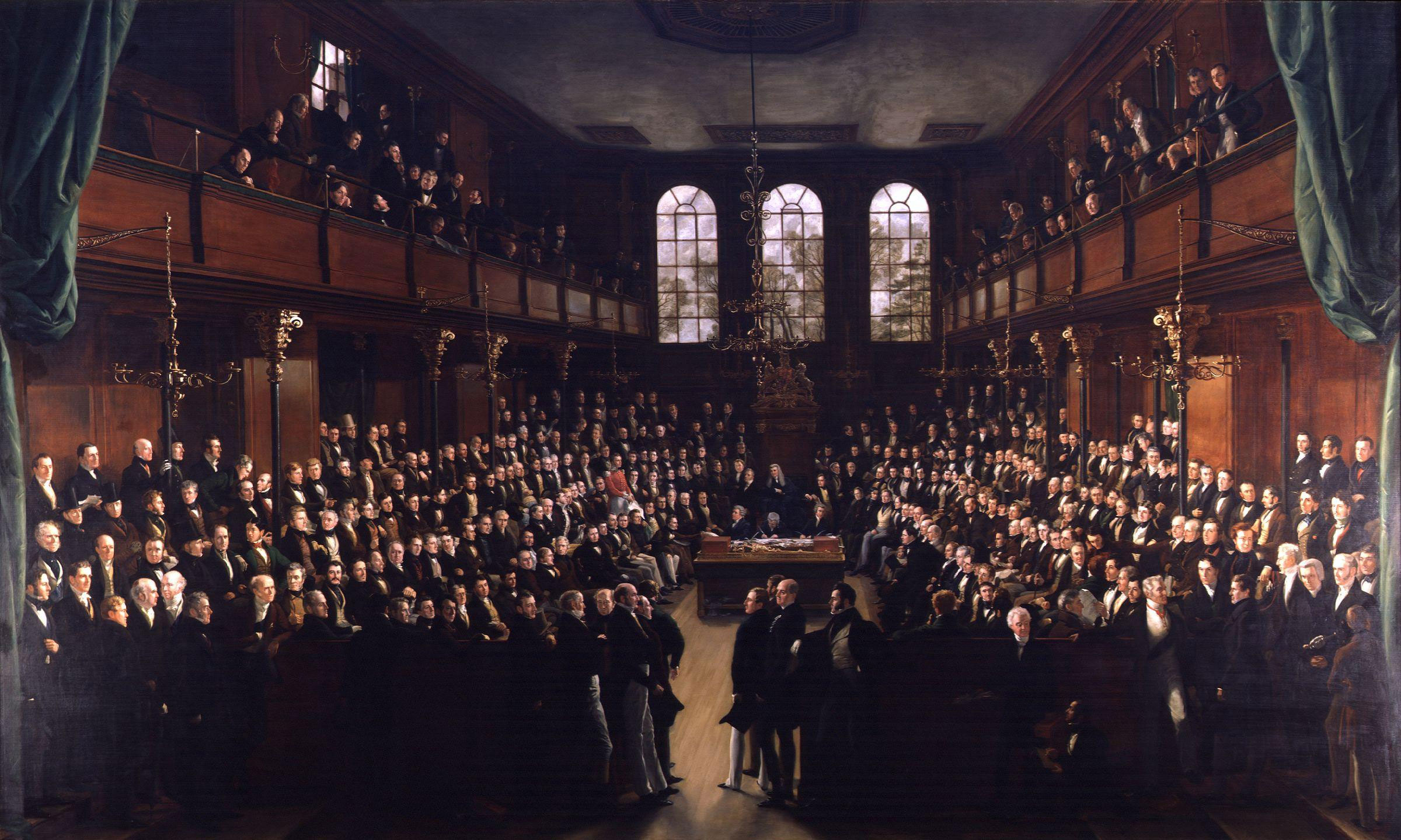
[PB: It would be interesting to chart the transformation of facial hair at this time.]
On the 15th of March 1832 he returned to the Army, exchanging into the 15th Hussars where he assumed command of the regiment.
A martinet and perfectionist in military detail, he aroused great resentment amongst his officers, one of whom, Captain Wathen, a veteran of Waterloo, he had court-martialled (23rd of December 1833). The trifles on which the case turned, the issue of stable-jackets, the Captain's conduct on parade, and a troop debt, were exacerbated by the manner in which the other ladies of the regiment treated the new Colonel's wife.
With her previous doubtful reputation now increased and joining her husband in Cork, she had made an instant stir amongst the "military masters" of the garrison. The Brudenells were made to suffer, socially at least, for her indiscretions, by the wives of the other officers – notable amongst them being the wife of Captain Wathen – a Lady in her own right who claimed descent from the diarist John Evelyn. None accepted Lady Brudenell's invitations, nor invited her to any of their gatherings. This, to a man of Lord Brudenell's temperament, could inevitably only lead to retaliation.
The verdict, when it came, honourably acquitted Captain Wathen of all the charges laid against him, and he was given back his sword. Censured for having advanced several assertions without having established the facts and for "conduct revolting to the honour and feelings of a gentleman", James Brudenell was removed from the command of the regiment by order of the King. Leaving Cork in a hurry, both he and his wife were held up to public ridicule.
For the next two years he bombarded the War Office with claims that he had been unfairly dealt with and demanded a re-consideration of the findings of the court-martial. Refused, he considered that he was being unfairly treated for political reasons. Although not dismissed from the Army, he had, nevertheless, been placed on half-pay from the 11th of March 1834.
The events played heavily upon his family – his father and a sister, Harriet, being the most affected. The latter had married Lord Howe, then Chamberlain to Queen Adelaide, wife of King William IV. Both Queen and Countess, in a flood of tears, begged for the disgrace inflicted upon his family name to be removed.
His Majesty gave way and Lord Hill, the Commander-in-Chief of the Army, having been summoned, the way was open for a new appointment. This, dated the 25th of March 1835, was to command the 11th Hussars, at a cost rumoured to be in excess of £340,000. The caused an uproar in the House by the Radicals – said to hate everything connected with the Army – from "the pipeclay on a private's belt, to the feathers on a general's hat."
The 11th were then in India, and a few months later the new Colonel and his lady were on their way to join them; a leisurely journey, seeing, and being seen, every mile of the way. They did not join the regiment, then at Cawnpore, until the 24th of October 1837. Before he again left its shores his father had died, on the 14th of August 1837, and he, now Lord Cardigan, arrived back in England on the 8th of June 1838, to go into quarters at Canterbury.
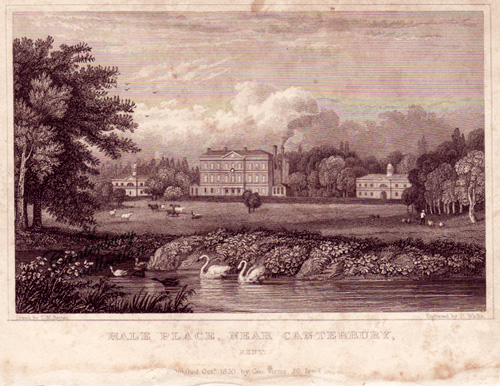
Although these had handsome apartments, the Cardigan's took over Hale's Place, on the outskirts of the city. On the 7th of February 1840, Lord Cardigan, mounted on a magnificent Arab charger and with a detachment of 100 picked men of the regiment, rode to Dover to meet Prince Albert, the intended husband of Queen Victoria, and escort him to London. In consequence, her Majesty directed that hereafter the regiment would be known as the 11th, or Prince Albert's Own Hussars.
The changeover from Dragoon scarlet to Hussar blue was made with as much magnificence as military requirement permitted. His critics said that he had paid the entire cost of the uniforms from his own pocket; others, less extreme, said he had shared the cost with Prince Albert.
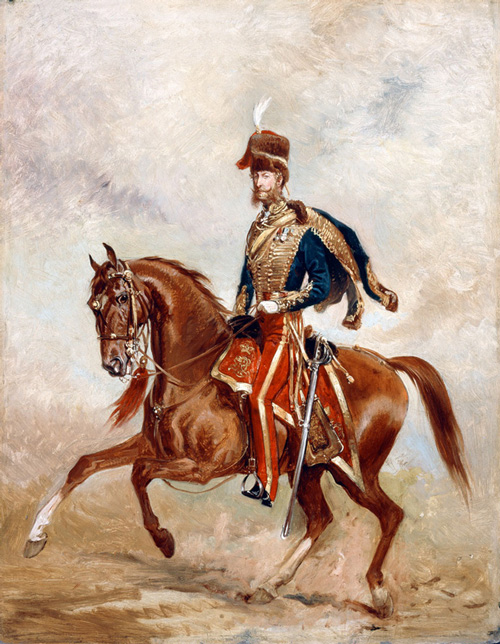
[Source: https://artuk.org/discover/artworks/lieutenant-colonel-later-lieutenant-general-james-thomas-brudenell-17971868-7th-earl-of-cardigan-11th-prince-alberts-own-hussars-182615]
Lieutenant-Colonel (later Lieutenant-General) James Thomas Brudenell (1797-1868), 7th Earl of Cardigan, 11th (Prince Albert's Own) Hussars (NAM)
Lord Brudenell was commissioned in 1824. He purchased a succession of promotions and by 1832 had risen to lieutenant-colonel. From 1836 to 1854, Cardigan commanded the 11th Regiment of (Light) Dragoons, on which he spent the vast sum of around £10,000 so that it became the smartest cavalry regiment in the British Army. Cardigan's most famous action took place during the Crimean War (1854-1856) when, during the Battle of Balaklava (25 October 1854), he misinterpreted an order and led the Light Brigade in the fateful charge down 'the valley of death', against Russian positions.
Leading the charge, he was among the first to reach the Russian guns, but in the melée he turned back leaving his men without direction. Cardigan gained a reputation for being arrogant and confrontational. In the notorious 'Black Bottle' affair, he ordered the arrest of an officer who placed a wine bottle instead of a decanter on the mess table.
[Source: https://artuk.org/discover/artworks/view_as/grid/search/makers:alfred-frank-de-prades-18401895]
While still in the city, Cardigan and his regiment were involved in a number of scandals, chief amongst which was the "Black Bottle" affair, involving an officer named Reynolds (he was tried by a Court-martial on the 28th of September 1840 for "Writing and sending an improper letter to his commanding officer" and sentenced to be cashiered) and of which much has been written.
ADD SHORT SUMMARY OR LINK
[PB. Jan 2014: There is a considerable literature on this event, in which Cardigan ordered the arrest of an officer, Captain Reynolds, for placing a black bottle of wine on the table, not a decanter. For example the incident is described in detail in Cecil Woodham Smith's The Reason Why (date), pp., reprinted in The Oxford Book of Military Anecdotes, edited by Max Hastings (extracts online at http://books.google.co.uk/books?id=1_fwo9-URNEC (accessed 3.1.2014).
Thanks to featuring prominently (though inacccurately – e.g. Louis Nolan is substituted for Reynolds) in the 1967? film of the Charge, the Back Bottle Affair continues to resonate. For example, in a facetious article in the The Independent (3.1.2014) on how "the posh" exact revenge for social slights:
"...in 1840, there was the Great Victorian Officers' Mess Dispute, otherwise known as the Black Bottle Affair, which began with a difference of opinion over the correct receptacle for decanting wine, and ended in a wounding and a subsequent trial.
It featured the seventh Earl of Cardigan, one of the lunatics in charge of the Light Brigade in the Crimea, who had ordered an officer called Captain Reynolds to be arrested for placing on a table at the regimental HQ in Canterbury a black bottle of wine rather than a decanter.
An account of the silly business appeared in the Morning Chronicle, and Cardigan challenged its author, Captain Harvey Tuckett, to a duel on Wimbledon Common. Tuckett was injured, the earl tried in the House of Lords, and, to no one's surprise, acquitted."
[Source: http://www.independent.co.uk/news/uk/politics/the-bullingdon-club-when-gentlemen-fall-out-973702.html (accessed 3.1.2014).]
Moving to Brighton in the second half of 1840 he was soon clashing with his officers again, this time another Captain Reynolds (but of no relation to the first) as to his manner of riding. Incensed by this, the second Captain Reynolds sought the help of an ex-officer of the regiment, a Captain Tuckett, who had also fallen foul of Lord Cardigan when in India.
Letters to various newspapers provoked a duel, which was contrary to military law and a breach of the peace. On the 12th of September 1840 this was fought on Wimbledon Common, Tuckett being wounded in the hip.
Summoned to appear before magistrates on the 28th of September for "Feloniously shooting Tuckett", Cardigan, precluded by his rank from being tried, except by his peers, next appeared before a full Parliament on the 16th of February 1841. The one hundred and twenty peers present, with a single qualified vote, found him "Not Guilty, and acquitted of the felony whereof he now stands indicted."
In the meantime Captain Reynolds had been sentenced by a court-martial and cashiered, and Cardigan involved in still more incidents which were seized upon by the newspapers, and the cancelling of public performances at which he was present, by public protest and booing.
Warnings from the Horse Guards failed to halt his series of complaints on the slightest pretext. In the spring of 1841 the 11th had moved to Hounslow Barracks. Flogging was still prevalent in the British Army as a punishment, a sentence of 100 lashes being carried out on a man of the 11th immediately after, and in the same place where Divine Service had just been held, on the Easter Sunday of 1841. Public outcry was great, but Cardigan was impervious to criticism.
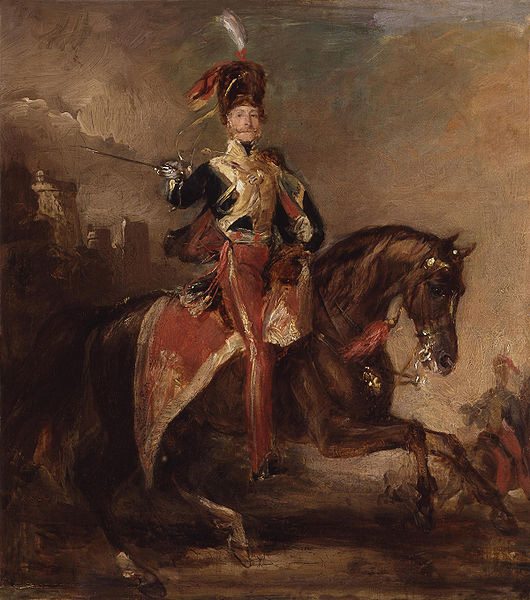
Also in 1841 he had tried to obtain the position of Lord-Lieutenant of Northamptonshire, only to be told that his military position precluded it. Twice over the next two years he contrived to fill a vacancy for the Order of the Garter, but without success.
Up to this time both he and his wife had pursued their amorous associations as they pleased, his wife entering in into a more or less permanent relationship with Lord Colville. When the latter apologised for this, Cardigan is said to have replied, "My dear Sir, you have done me the greatest service that one man can render to another." The couple separated in 1846. She died (intestate) on the 15th of July 1858, aged 60, at 36 South Street, Park Lane, London, England. Her estate was valued at under £2,000.
Every movement of the regiment brought more publicity. There was Captain Forrest and the refusal by Cardigan to allow him leave to visit his wife, who was expecting a child, his reaction to the insolence of a young officer on riding parade, the mysterious death of a society beauty aboard his yacht, and an action brought by the Paget family for "criminal conversation" (a polite term for adultery).
Although the judgement was in his favour one wonders if all the evidence brought out the fact that he was not entirely innocent. The private detective hired to follow the pair, Frederick Winter. failed to turn up on the first day of the trial and later his evidence was considered so inconclusive that the jury returned a verdict in favour of Lord Cardigan
1851 Census
Pockthorpe Cavalry Barracks, Norwich.
Earl of Cardigan, Commanding Officer, married, 53, Colonel, born Hambleden, Bucks.
On the 9th of March 1854 he received orders to go on foreign service. Now, everything done by the regiment or said by its commanding officer was commented on by the press. Cardigan was by then 57 years of age and his health was far from good. He suffered much from a bladder complaint and was subject to chronic bronchitis.
With acute satisfaction Cardigan was gazetted Major-General on the 20th of June 1854 and given command of the Light Cavalry Brigade. His enthusiasm was tempered, however, by the fact that George Bingham, 3rd Earl of Lucan, was to lead the Cavalry Division [i.e. the combined Light and Heavy Brigades]. Although they were brothers-in-law each hated the other like poison.
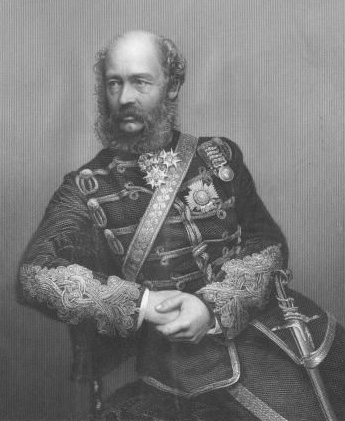
Three years younger than Cardigan, Lucan had entered the Army at the age of 16 and ten years later obtained the command of the 17th Lancers by purchase. Having married Lady Anne Brudenell, and not being overly wealthy, he was unable to keep her (and their six children) "in the manner to which she was accustomed". Cardigan, ever jealous of the family honour, found that Lord Lucan resented his interference and their mutual hatred become a common scandal. The Duke of Wellington, asked to intervene, tried but gave it up, saying that "it was much worse than winning the battle of Waterloo."
In 1854 the Lucans parted, and worsened the situation. It had been suggested that the cavalry should march across France to Marseilles, but this was cancelled, the thought arising that whilst the march to Paris might be triumphal, the sight of English uniforms in the South, where Waterloo was still a painful memory, was doubtful. Cardigan however, decided that was the way to go.
After being applauded in Paris he went from Marseille to Athens. The King and Queen of Greece were at the time said to be "more Russian than the Czar", but French troops were in that country and he was able to view the monuments of a past culture in a comparatively friendly atmosphere.
Rejoining the Army at Scutari, Cardigan next put on a show by riding through the rough and smelly streets of Constantinople in full uniform. Varna, some 180 miles away, was decided upon as the Allied port of concentration and on the Light Brigade being ordered there Cardigan applied to Lord Raglan to travel there instead of to Lord Lucan, who was his immediate superior. Although a mild reproof was sent, by then Lord Cardigan had gone, and the letter was put aside.
The dispute between the pair was carried on at every level that could cause opposition. Reports were requested from Cardigan of the most detailed kind on unimportant items. One order that Lord Lucan sent and found countermanded was on shaving. Bad razors used on sunburnt skins were causing veritable wounds, and although both Raglan and Lucan disliked the wearing of whiskers and moustaches, hair on the face was permitted.
While at Devna he was given his first independent command. Sent out with the express purpose of ascertaining the Russian whereabouts, Cardigan and his two squadrons (from the 8th Hussars and the 13th Light Dragoons) covered 350 miles in 16 days. The strain imposed on the men, and more especially on the horses, gave rise to much disparagement of the "Sore-backed Reconnaissance", as his critics called it.
Relations between Cardigan and Lord George Paget (commanding the 4th Light Dragoons, and his second-in-command) were also soured by the fact that the latter was the brother of William Paget, whose wife had been concerned in the "criminal conversation piece" case in 1843.
Robert Portal, Lord George's Aide-de-Camp and friend, thought that Cardigan had "no more brains than his (Portal's) boot" and that "two such fools as Lucan and Cardigan could hardly be found elsewhere in the British Army."
The order to cross the Black Sea to the Crimea proper, finally convinced him that the Light Brigade was his own separate command and he continued to oppose Lucan by every means in his power, although this was mainly by angry letters. In a reply to one of these Lucan reminded him that although his rank was that of a Major-General: "his position as commander of the Light Brigade was only that of a Brigadier and that there were many such Brigadiers in the six Divisions of the Army of the East."
Even on the voyage the two annoyed each other by the messages they exchanged, Lord Lucan being particularly annoyed by the ship in which Cardigan was travelling, the "Himalaya", trying to forge ahead and appear to be leading the Fleet.
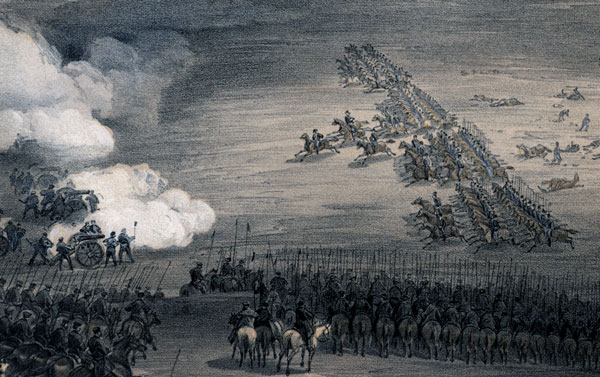
Extract from "The Field", 16th of December 1854:
"Lord Cardigan"
"The following account of Lord Cardigan's share in the memorable charge of the Light Cavalry Brigade at Balaclava is derived from a letter to a friend from his Lordship.
'When he had ridden through the Russian lines and was near the muzzles of the guns in an earthwork battery, he was unable to see what to do next. Observing however, that the embrasures were not so high, he put his horse at one of them as he would have charged a fence in Leicestershire. The horse took the wall, but alighting on the gun, they fell together. Lord Cardigan got up as quickly as possible and flourished his sword, but to his astonishment and relief he saw the Russian artillery men running away, so knowing that he had no support, he returned with the rest of the division who were fortunate enough to get back to their own lines.'"
[PERHAPS ADD MORE ON CARDIGAN IN THE CHARGE?]
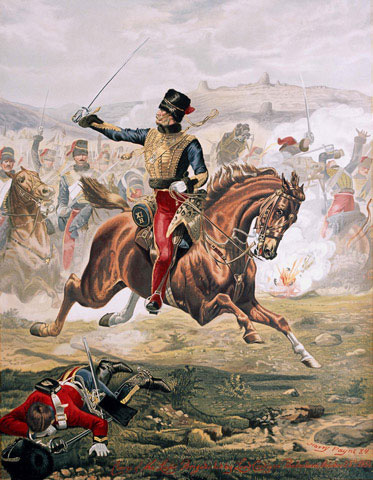
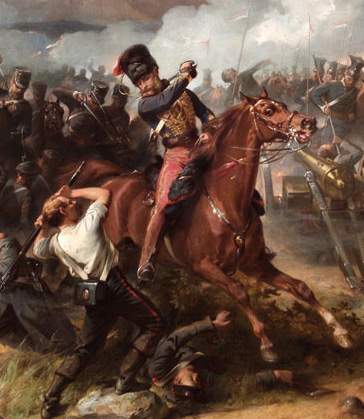
[DATE & SOURCE?]
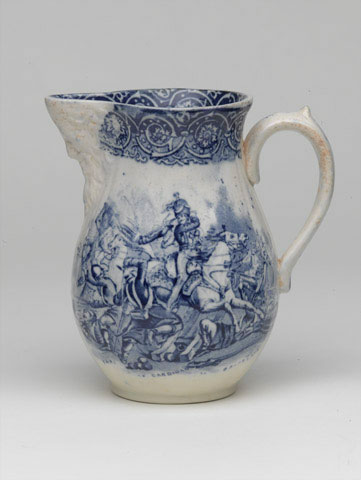
[Source: National Army Museum: www.nam.ac.uk/online-collection/detail.php?acc=1606-08-20-1 (accessed 6.8.2013).]
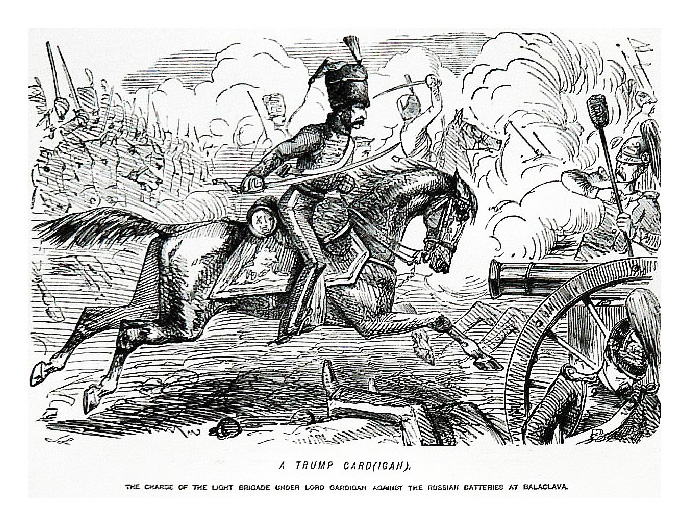
[DATE?]
Commanded the Light Cavalry Brigade throughout the Eastern Campaign of 1854, including the battles of the Alma, Balaclava and Inkerman and the Siege of Sebastopol.
Entitled to the Crimean medal with clasps for Alma, Balaclava, Inkerman and Sebastopol, the Turkish Medal, Commander of the Legion of Honour, Order of the Medjidie, 5th Class, and created a K.C.B in July of 1855.
Horse Guards,
16th May 1855.
Sir, – Referring to my letter of the 10th inst, I have the General Commanding-in-Chief's command to desire that all officers entitled to receive the Crimean medal and now with their Depots to be ordered to attend in London for the purpose of being present on the parade on Friday the 18th of May 1855 at 10 o'clock precisely. Be pleased to acknowledge its receipt.
I am, etc. etc.,
G.A. Weatherall. AAG.
His Crimean medal was presented to him by Queen Victoria at a ceremony held on Horse Guards Parade on the 18th of May 1855. More...
Cardigan was made a KCB (Knight Order of the Bath) on the 5th of July 1855.
By December 1854 Cardigan had applied for leave to return to England, as his health was deteriorating and a Medical Board examined him on his yacht and made the recommendation that "he may be allowed to return to England for the benefit of his health. He has stomach problems and difficulty in passing his urine."
His return to England (in January 1855) brought him civil honours everywhere he went. His picture, purporting to depict him riding into the Russian guns, was sold everywhere and Queen Victoria invited him to Windsor where he held his own "court", telling his story to the assembled family.
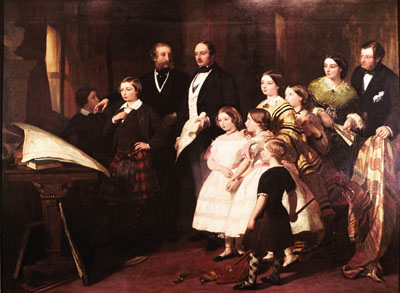
[WHERE IS THIS PAINTING?]
Appointed to the post of Inspector-General of Cavalry, he became the bane of every commanding officer of the regiments he inspected. Although the war was now behind him, angry voices were now being raised into the way it had been conducted and an enquiry named him as one of the senior officers who were in some degree to blame.
Denying all charges, he appeared before the Board which sat at the Chelsea Royal Hospital in 1856, but eventually it was decided that "the system" was to bear the blame.
[SOURCES OF EXTRA INFO ON THIS?]
But the calm of his new life was short-lived. A book published in December 1856 by John Murray by "An Officer on the Staff" had placed doubts on the story that he had ridden in the Charge. The offending passage implied a controversy as to whether he had actually reached the battery, and reflected on his horsemanship:
"This was a moment when a General was most desired, but very unfortunately Lord Cardigan was not present. On coming up to the battery (as he himself afterwards described it) a gun was fired close to him and for a moment he thought that his leg was gone – Such was not the case, as he remained unhurt; however, his horse took fright – swerved around – and galloped off with him back to the rear, passing on its way the 4th Light Dragoons and the 8th Hussars before those regiments got to the guns."
The officer who had written the book turned out to be -->Somerset Gough Calthorpe, a Lieutenant in the 8th Hussars at the time of the Charge, who was acting as Aide-de-Camp to Lord Raglan, his uncle. Acrimonious letters passed in the Press, and he raised the question of a junior officer being able to malign the character of a superior, as well as trying to get Calthorpe dismissed from the Army. (The latter became a Major-General himself in 1881.)
In June 1863 a law-suit for libel appeared before the Court of Queen's Bench in the medieval courtroom in Westminster Hall, and counter and cross-counter affidavits were submitted by both sides, many of these coming from participants who averred that they had seen Cardigan amongst the guns and others equally positive who said he had never reached them.
These affidavits, on Calthorpe's side, were made by one captain (the ranks given in the list are those at the time of the battle), one lieutenant, one cornet, one sergeant-major, three sergeants, and nine privates, in addition to that of Lord Lucan, who in his despatches at the time had given unstinted praise to Cardigan. [TEXT MISSING?] now declared that from his position. some way along the valley where he waited with the Heavy Brigade, ready to support the Light Brigade should they be pursued in their retreat, ended his with:
"I saw Lord Cardigan gallop up from the direction of the enemy, when within a short distance from my front he brought his horse to a walk, and passed me going up the valley towards Sebastopol. He was at a distance of about 200 yards from me."
These affidavits, where known, can be found in the particular records of the individuals named:
1581, James Bagshaw, 4th Light Dragoons
1302, Daniel Deering, 4th Light Dragoons
1064, James Donoghue, 4th Light Dragoons
1481, John Edden, 4th Light Dragoons
1192, Robert Ferguson, 4th Light Dragoons
Joseph Hely, 11th Hussars
1529, John Keen, 13th Light Dragoons
1509, Thomas King, 4th Light Dragoons
Godfrey Charles Morgan, 17th Light Dragoons
1004, Thomas Morley, 17th Lancers
635, Samuel Parkes, 4th Light Dragoons
Edward Phillips, 4th Light Dragoons
1230, Frederick Short, 4th Light Dragoons
Lord Cardigan, who himself gave his evidence by way of an affidavit and so could not be questioned upon it, asserted that he might have produced far more affidavits backing him. However:
"[S]ome of my most important witnesses are dead, some are serving in India and some object to give positive evidence on events which happened so long ago.
A stlll more serious difficulty in the way of my obtaining affidavits is the reluctance of military men of all ranks to give voluntary evidence affecting the character of an officer in the high and influential influential position as myself."
General Scarlett, however, one who did testify on Lord Cardigan's behalf, ended his with the words:
"I firmly believe from the information that I received both at the time of the engagement and afterwards, that Lord Cardigan was the first to charge into and through the Russian battery, and that he was amongst the last, if not the last, to return from behind the guns."
Cardigan eventually won his case, but there was nothing clear-cut about the verdict – Calthorpe simply agreeing that he may have made a mistake in saying that Cardigan had not entered the battery and that those who saw him ride back may have taken him for the wounded Lieutenant Houghton of the same regiment, whose physical appearance was very similar.
Extract from a news item which appeared in a Yorkshire newspaper (title and date unknown):
"How Lord Cardigan was wounded"
"Various accounts are given by the men respecting the manner in which Lord Cardigan was wounded. One of the 4th Light Dragoons said that he saw three Polish Lancers charge him. The Lancers were immediately cut down by a party of 8th Hussars who came up to the rescue. The few of the 8th that survived the charge were presented with £100 at Scutari by Lord Cardigan.
A private of the 13th Light Dragoons gives a different version of the affair – to the effect that he was wounded by the bursting of a shell, and nearly fell off his horse."
[WHERE DOES THE QUOTE END?]
Of the events in the Crimea, much has been written. Whether or not Lord Cardigan actually reached the guns during the Charge has been disputed by many, even to a law-suit as late as June of 1863 (discussed above). Suffice to say that such a man as Cardigan, with all his principles (however misguided under certain circumstances) would hardly have put himself in the position of not acting up to them. Again, much has been written of this, and need not be repeated here.
Death registered
Elizabeth Jane Henrietta Cardigan [1st wife], September Quarter 1858, St George's Hanover Square.
When his first wife died in 1858 he married Adeline de Horsey in the Garrison Church at Gibraltar. The daughter of Mr. Spencer Horsey de Horsey, MP, and Adeline, daughter of the Earl of Stradbrook, they had first met in January 1857 at a Deene house party. He was 60 and she was 34. Swept off her feet, she had left home and set up house with him in Norfolk Street, Park Lane, London. The wedding was followed by a pleasure trip around the Mediterranean and the capitals of Europe.
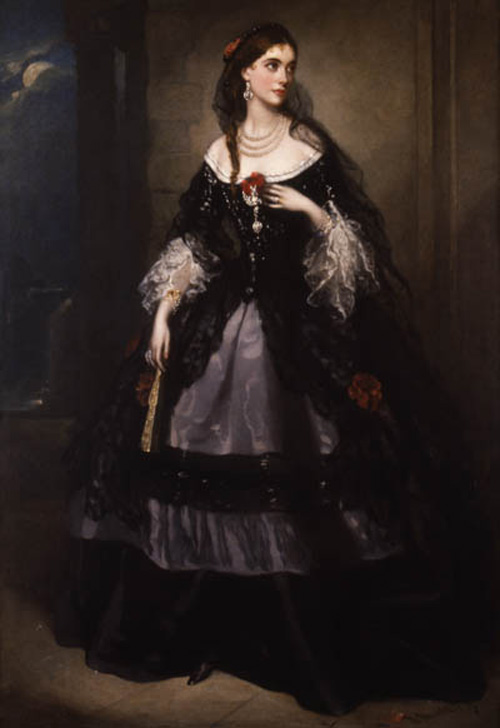
According to the Deene Park website (accessed in 7.5.2012):
"The 7th Earl of Cardigan was sixty when he fell in love with Adeline Horsey de Horsey who was twenty-seven years younger. She was fast and beautiful and became his mistress. When his wife died in 1858 they sailed to Gibraltar and were married there, well away from London society who were scandalized by their behaviour.
In spite of various infidelities they were very happy till he died in 1868. The following year she gave a banquet for three hundred people for the unveiling of the impressive monument to them both in the church.
She was to live another forty-six years, enjoying a merry widowhood at Deene and elsewhere in extravagant luxury".
[PB]
[IS THIS PAINTING AT DEENE?]
His social life was not a very happy affair either. Socially ostracised by the Queen, who, by now free of the hero-worship after the Crimea, would not accept his wife at Court, and Cardigan, for his part, would not accept any invitation which did not include her. One instance of the Queen's new attitude was the painting out of her likeness in the picture by Sant depicting herself and the Royal family listening to Cardigan telling the story of the Charge, in the Great Gallery at Windsor.
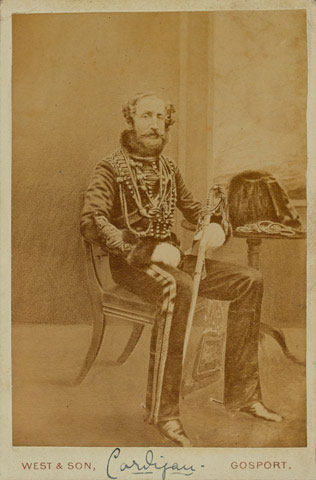
DATE?
Another instance was the refusal to allow him to become Colonel of one of the Household Cavalry regiments as it would have brought him into contact with the Royal Household. His proudest moment (as he himself later said) was when he was appointed Colonel of the 11th Hussars. He had been Colonel of the 5th Dragoon Guards, but exchanged when the opportunity arose.
In the same year (1860) his term in the post of Inspector-General of Cavalry ran out and some twelve months later he was promoted to Lieutenant-General. In 1861 he attended the Prussian Army manoeuvres – but made no secret of his opinions and was soon considered so arrogant that several Prussian officers challenged and offered him out, but a move was instigated however, together with a little diplomatic pressure, that led to his somewhat hurried departure home.

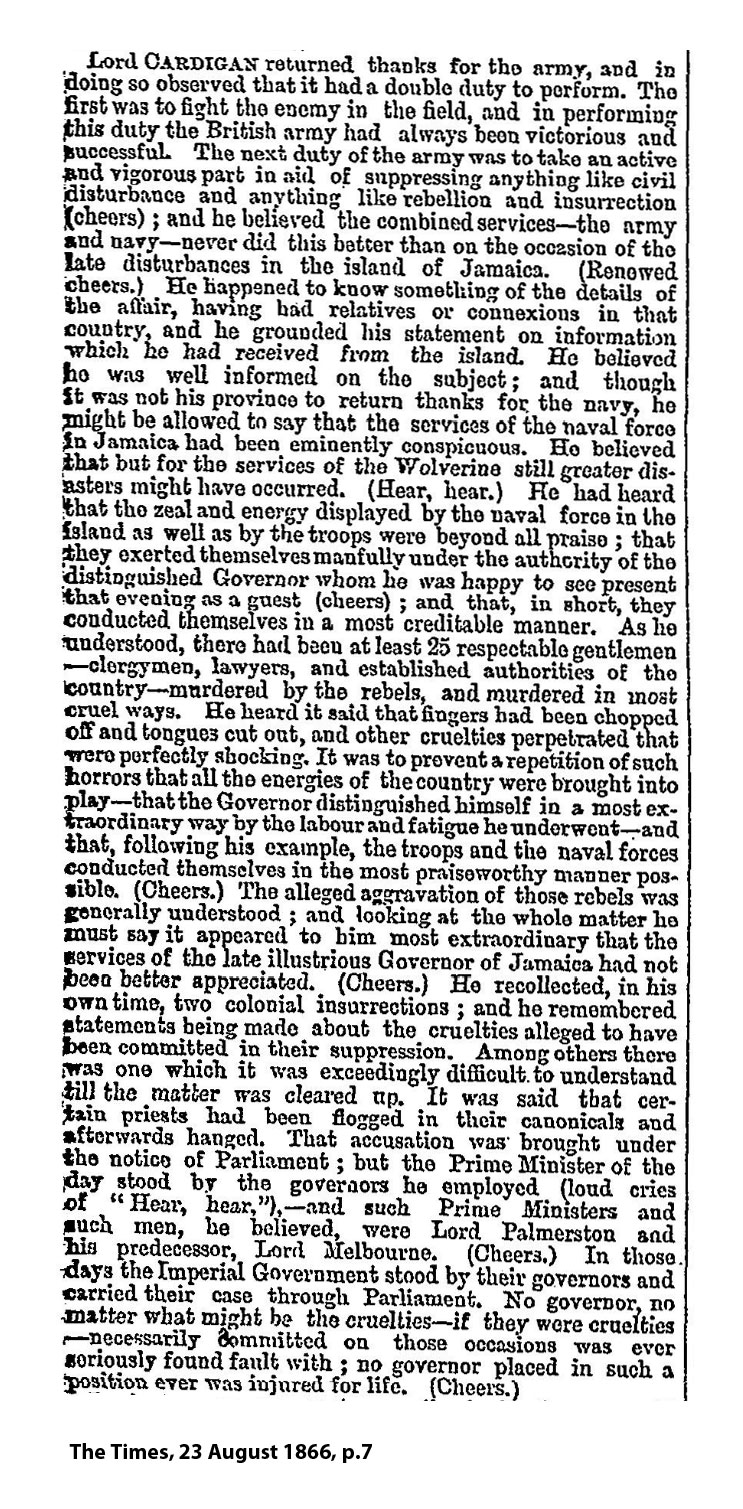
For more on Cardigan and the Eyre affair, see e.g. Donald Thomas, Charge! Hurrah! Hurrah!, pp. 318-320, and Adrian Desmond and James Moore books on Darwin (Darwin, and Darwin's Sacred Mission: Race, Slavery and the Quest for Human Origins". There are probably other sources.)
See the record of 1029 Gordon Duberry Ramsey, 17th Lancers for considerably more on Jamaica.
(Notice also the mention of "Darwin" as a diner. This was not Charles Darwin, who was aligned with the opposition to Eyre and called for his prosecution, but his banker son George. This so infuriated the father that he demanded a retraction from The Times [check details - because CD did not want his own name associated with Eyre, or because he could not believe his son could have been?].)]
Death registered
James Thomas Brudenell, 70, March Quarter 1868, Oundle.
On the 26th of March 1868 he was out riding with some friends and a groom pointed out to Lord Cardigan that the young horse he was riding was very restive when alone. Cardigan quickly replied that "he was not yet too old to ride." Later that same day he had been (still on the same horse) to see the sister of one of his gamekeepers who had met with a fatal accident. Leaving the house to return to Deene he had stopped to speak to a local road surveyor and then continued his journey.
Going in the same direction shortly afterwards this man came up with the Earl, who had fallen from his horse and lay in the road, livid in the face and foaming at the mouth. A carriage was sent for and as people came from their homes Cardigan was got to his feet. He spoke no word at this time nor did he for the two days he lay at Deene whilst doctors from as far away as London were in attendance.
From the Wakefield Journal and Examiner, 9th of April 1868:
"The Northamptonshire journals published on Saturday have given further accounts of the manner of Lord Cardigan's death than have yet appeared. It was on his return from seeing the corpse of a gamekeeper accidentally killed, that his Lordship met with the accident which led to his own death. He was riding a fresh and restive horse, and within a quarter of a mile from Deene the animal was seen to be rearing and plunging violently, and Lord Cardigan, though a skilled and courageous horseman, lost his seat and fell with much force to the ground.
On seeing the deceased gamekeeper he had obviously been much affected; he communicated with the keeper's sister, and told her to keep her spirits up and appeared unusually kind and talkative. In order to satisfy himself whether the poor fellow's death was accidental or otherwise the Earl had the body placed in a certain position to enable him to form an opinion, and afterwards started for home, and the next heard of him was some children playing by the roadside saw him endeavouring to control his horse, in doing so which he was thrown.
What followed is shown by the statement of Mr W. Siddons, an assistant surveyor of roads:
"I found his Lordship lying on the ground, his head doubled underneath his arm and chest. I thought he was in a fit, and untied his neckerchief and rubbed his hands and forehead. His face was livid, and he foamed at the mouth. In a few minutes I asked him if his horse had shied, but he made no reply. I then looked for any marks of his horse plunging on the road, but could not find any. I then raised him up and held him for some five minutes and called loudly for assistance.
In a few minutes some women came out of their cottage gardens, and I shouted for them to go and ask someone at the stables to bring his Lordship's carriage, and as soon as they had started to do so I tried whether he could walk and supported him whilst he walked at least a hundred yards, leaning heavily with his hands on my shoulders.
I then partly carried him until the arrival of his Lordship's groom on horseback who asked whether he should fetch a doctor, to which his Lordship made no reply, and I said, "By all means. Go at once." I took him some 70 or 80 yards further on, when we met the carriage coming for him. I assisted him into it and went with him to the Hall and helped his servants to carry him to his room. Her Ladyship then came in, and I left.
His Lordship never spoke from the time I found him to the time I left."
It appears that the horse arrived back at the stables before the alarm was given, but as the Earl was frequently in the habit of dismounting on his way, it was thought that the horse had run from him and no apprehension of an accident was felt by the stablemen.'"
He died on Friday the 28th of March in his 71st year. The cause of death was generally accepted as being "congestion of the brain" but the question remained as to whether his horse had shied at a heap of stones and the effort of bringing it under control had brought on the seizure.
For two days his body lay on a dais in a darkened room, while some two thousand people filed past – drawn perhaps by curiosity, or in order to pay their last respects. At each corner of the coffin stood a lighted candle in a silver candlestick, and his peer's robes, together with the Hussar uniform he had worn at Balaclava, his busby, sabre and medals and the regalia of his orders were laid upon the coffin.
At the funeral in Deene church four officers of the 11th Hussars acted as pall-bearers. Following the crimson velvet-covered coffin with handles, studs and name-plate of silver-gilt, came his charger, Ronald, "richly caparisoned", and the keepers and bandsmen of his private band brought up the rear. All the mourners were men, for in those days no woman ever attended a man's funeral.
There is an unconfirmed story that immediately after the burial ceremony, in which Ronald participated, he escaped and galloped round the park.
Cardigan had died at precisely 9.50 p.m. The normal hour for the sounding of the "Last Post" at British Army regimental quarters is 10.00, but from then on the 11th Hussars changed their time of sounding this to coincide with that of his death.
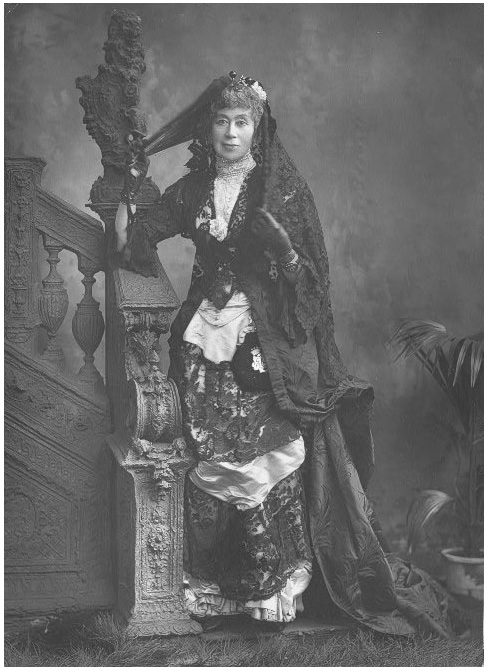
A year after his death, Lady Cardigan caused to be executed in white marble two recumbent figures, one of Lord Cardigan and the other of herself, by the German-born sculptor (later Sir) Edgar Boehm. The Countess is portrayed with her eyes open, gazing at the sleeping figure of her husband and around the sides of the tomb are carved scenes of some his exploits in the Crimea.

From the United Services Gazette, 17th of September 1908:
"Considerable indignation has been aroused in Northamptonshire owing to the desecration, presumably by trippers, of the tomb of Lord Cardigan in the historic church at Deene. The beautiful carvings on the monument have been badly damaged and the replica coronet, which figured in the Earl's funeral in 1868 and has since laid by the side, has been broken up. No trace can be discovered of the perpetrators of this deplorable outrage, but it is attributed to relic-hunters. The tomb is under the great family pew containing the remains of the late Lord Cardigan's ancestors, Brudenells who lived here as far back as 1582.
The monument is unique, for besides the Earl's recumbent figure, the Countess, then a young woman, is beautifully represented in marble, mourning with head on arm over the dead Balaclava hero who, in a bronze panel below, is represented leading the famous charge of the Light Brigade... In future the iron gates which admit to the tomb will be securely locked."
[PB: Further info in 1881-1911 Censuses?
According to one source, on 28 August 1873, five years after Brudenell's death, the Countess of Cardigan married Don Antonio Manuel de Lancastere Soldana, Conde de Lancastere [Portugal] at the Roman Catholic Chapel, King Street, Marylebone, London.
Her second husband died in 1898 at Paris, France, from bronchitis, and was buried at Père la Chaise, Paris, France.
[Sources: http://www.thepeerage.com/p2551.htm#i25510, http://www.thepeerage.com/p2556.htm#i25554 (accessed 19.1.2013)]
1911 Census
Brudenell House, 55 Burton Street, Melton Mowbray, Leics.
Countess of Cardigan.
[Other info?]
Death registered
Adeline [Countess of Cardigan LM] Brudenell-Bruce [2nd wife], 90, June Quarter 1915, Oundle.
According the thepeerage.com, cited above, she was buried on 28 May 1915. Her will was probated in August 1915, at £16,425 gross, and £9,199 net.
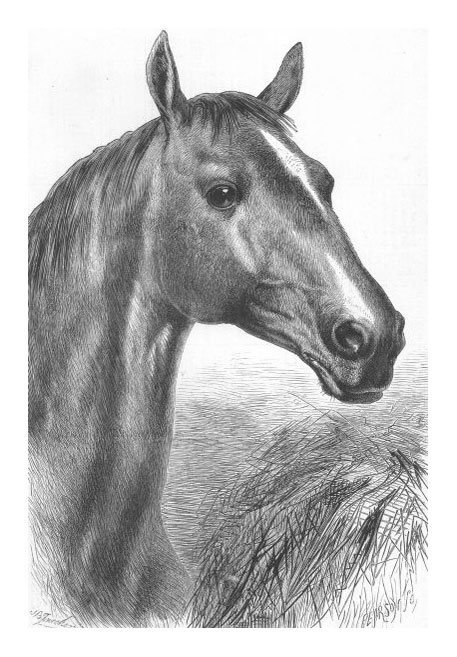
Lord Cardigan's charger, "Ronald", came through the Crimean campaign unscathed and was eventually brought back to Deene Park.
Census information for 1851 and 1911, and death registration for the former Countess of Cardigan, kindly provided by Chris Poole.
Dictionary of National Biography (article by John Sweetman): Brudenell, James Thomas, seventh earl of Cardigan (1797-1868) [John Sweetman] [http://www.oxforddnb.com/view/article/3765?docPos=1 (accessed 19.1.2013)]
I have posted this source (not for online publication) here: http://www.chargeofthelightbrigade.com/allmen/allmenB/allmenB_B/brudenell_j_B/brudenell_dnb.html.
| New on the site | Search | Index of men A |