Added 7.3.2016
IN PROGRESS – NOT FOR PUBLICATION
ON the floors, on the doors, poor slavey wonder'd
Where all the smuts came from –
Smuts by the hundred.
Scrubbing from morn till night
Rooms that would ne'er get bright –
How missis thundered.
Water and soap galore, used on that dirty floor,
Yet the came greasy spots still remained as of yore,
Grease spots and nothing more –
Stains by the hundred.
Soap to the right of her, soap to the left of her,
Missis in front of her
Bullied and thundered.
"Susan, thie floors too black," her's not to answer back,
Knowing she'd get the sack. Susan renews th'attack,
Then stopped and pondered.
Down the street, down the street, sad, heavy-hearted,
Into the grocer's store, poor Susan darted.
"Charge what you like," she cried,
"I'm not to be denied,
Only tell this," she cried,
What will make dirt go."
That'a very quickly done, stains you will soon have none,
Use this" – he handed one
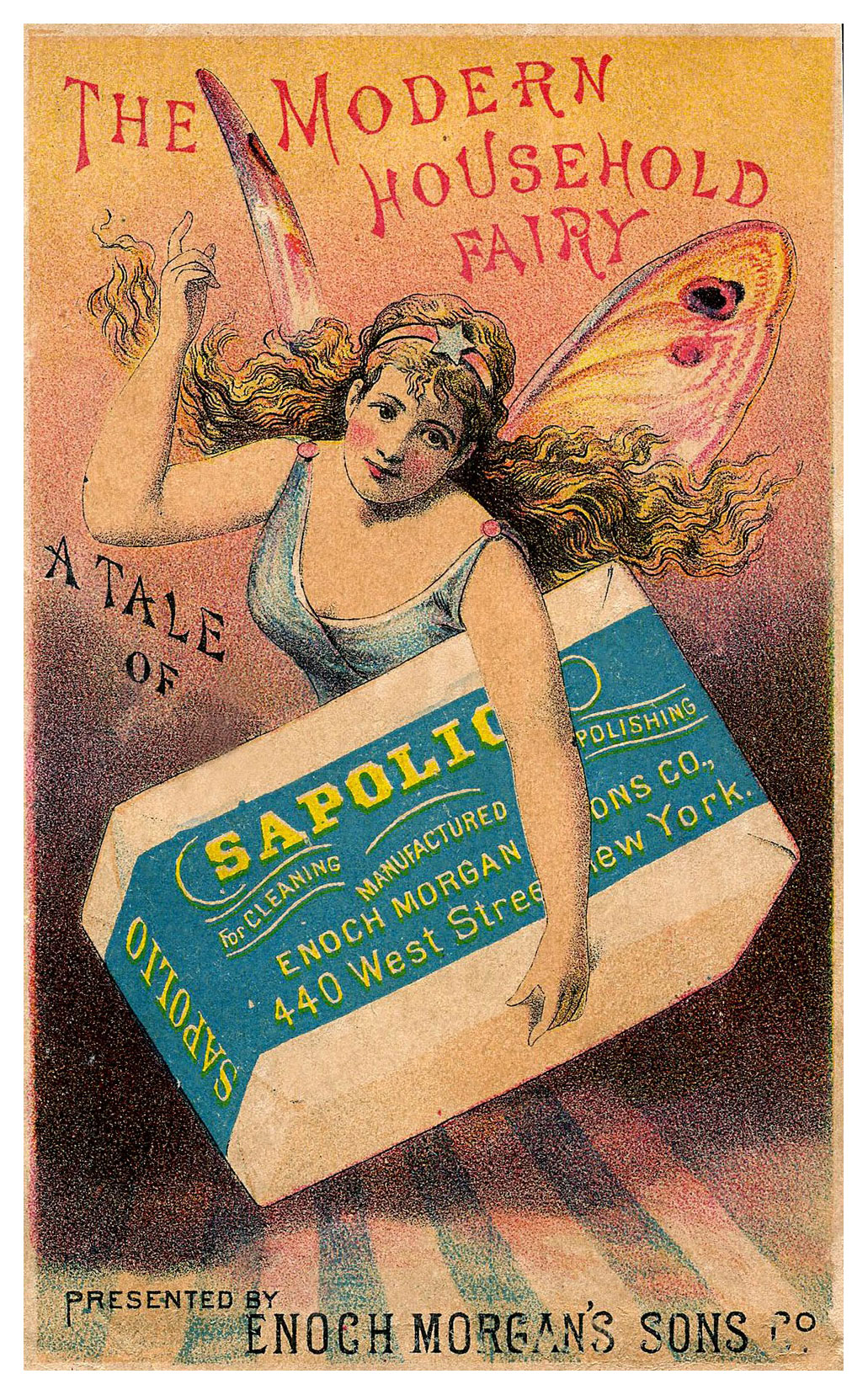
Block of SAPOLIO.
SAPOLIO to right of her, clean floors to left of her,
Missis at back of her
Beaming – with pleasure.
Bright looked the home this time,
Not a taint, not a grime,
SAPOLIO used this time –
Grand household treasure.
Small is the charge that's made,
Few pence in all that's paid.
Ne'er will the glory fade –
0f this home bright brigade;
E'er to the front will go
Morgan's SAPOLIO.
"WHERE DIRT GATHERS, WASTE RULES." – Great saving results from the use of Sapolio. Cleans Paint, Marble, Oilcloths, Metals, Bathtubs, Kitchen Utensils, Lavatories. Useful all over the house for all cleaning except laundry. A single trial coats little, and will save much future toll. Sold by all Grocers and Oilmen. Sample (full-size cake) sent post free on receipt of 3½d in stamps by ENOCH MORGAN'S SONS' Co., 31, Snow Hill, London.
Huddersfield Chronicle, Saturday 20 August 1887.
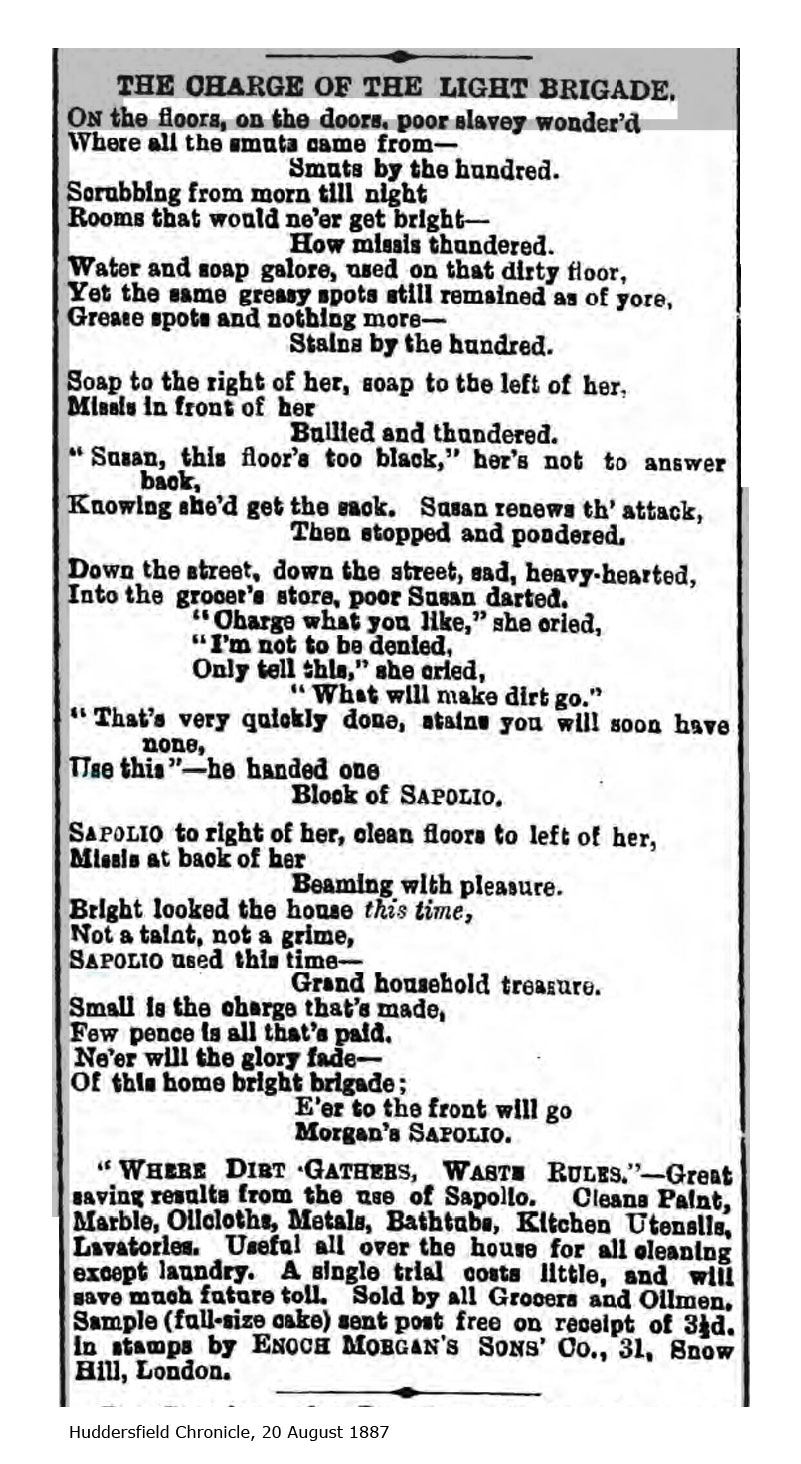
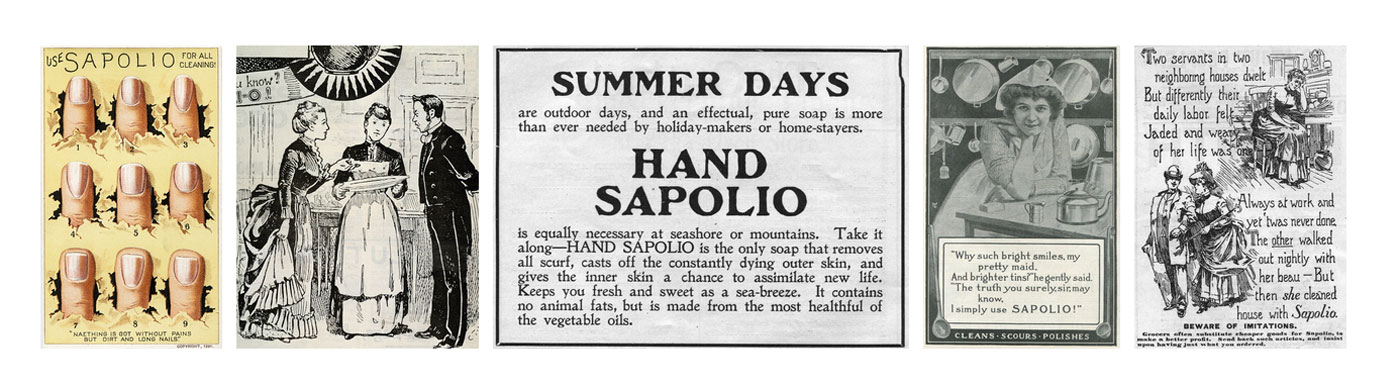
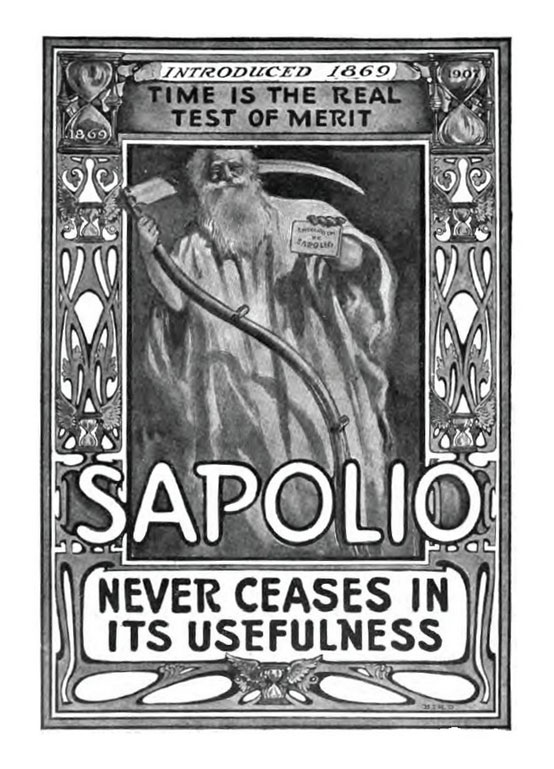
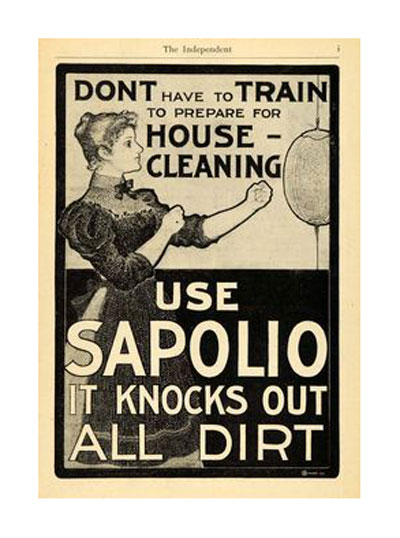
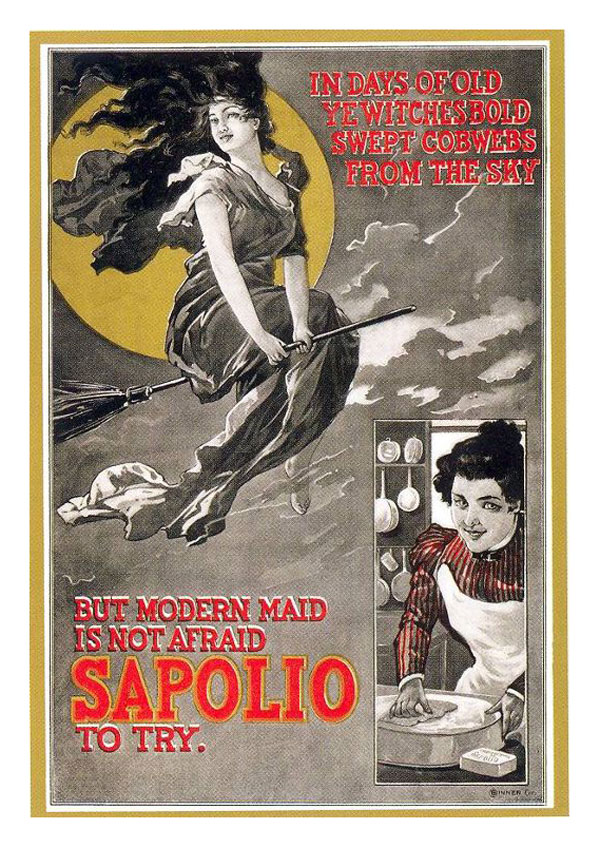
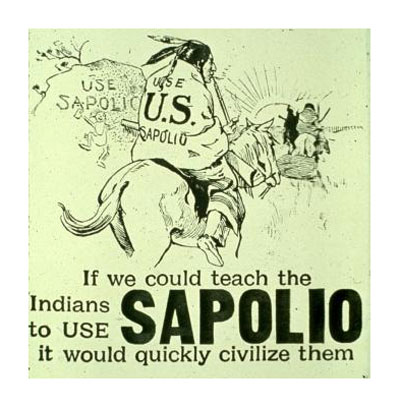
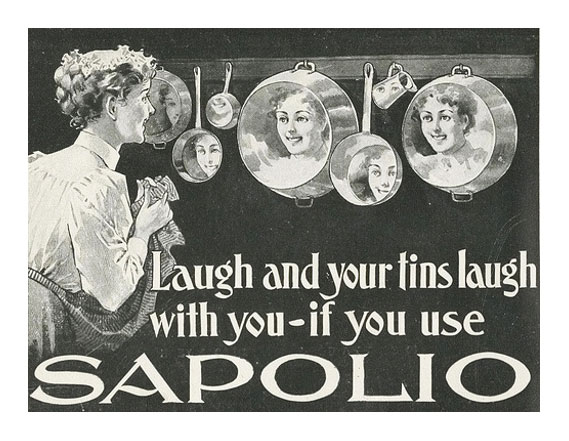
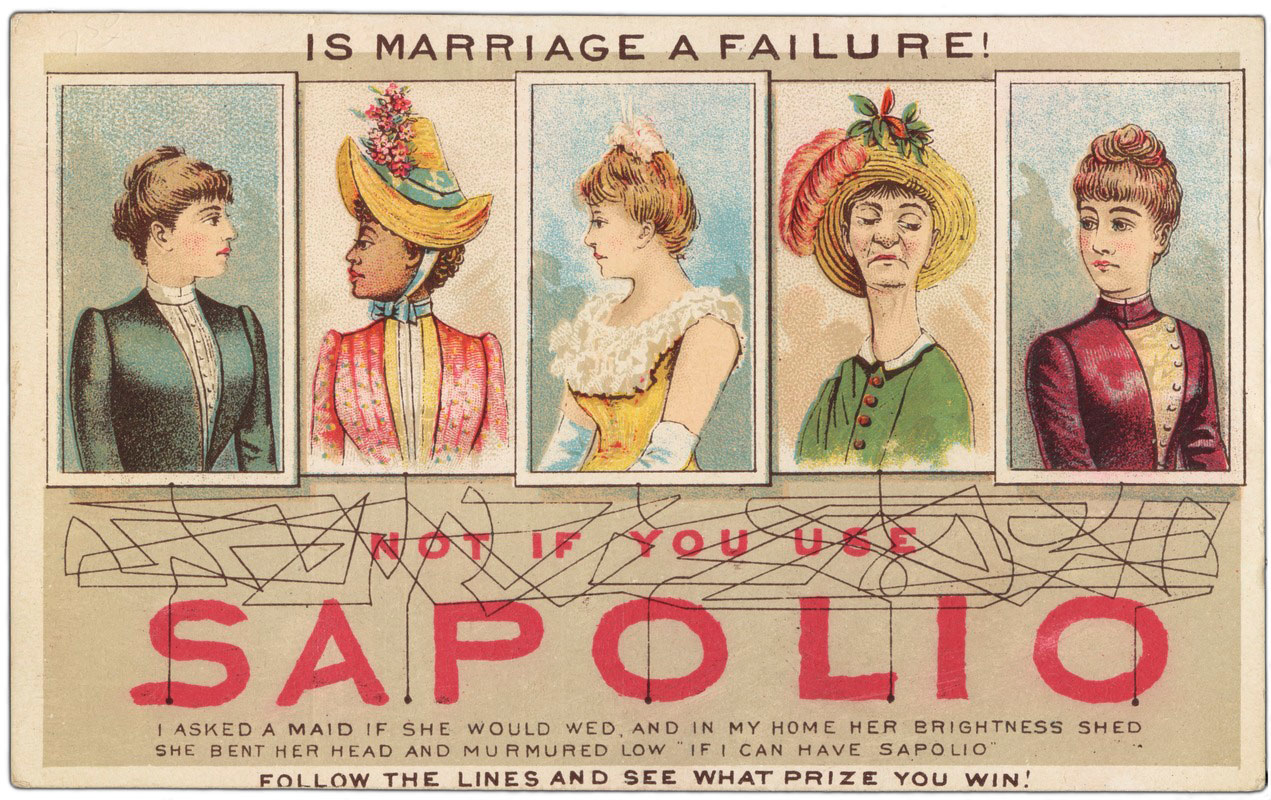
In its heyday in the late nineteenth century, Sapolio soap is said to have been the "world's best advertised product", achieving a seemingly insurmountable position in the market through witty images, jingles, and, as here, parodies of well-known poems. It seems the US-based owners felt so secure they discontinued most advertising and were soon overtaken by competitors. The firm disappeared before World War II, but has recently been revived in South America.
It is not impossible that this poem was written by Bret Harte, who was certainly fond of parodies and satires, and is known to have written rhyming leaflets promoting Sapolio when he was still living in the US. And he needed the work. Having achieved literary success (he was first published in 1857), Harte was by then "a failing writer with his best stories behind him, scratching out a precarious living in New York". Harte came to England in the early 1880s. If he is indeed the author, the poem may have been written when he was still in the US (try to find out if it was ever published there) and re-published in England in 1887, or possibly even written here - notice Sapolio's London address. It is also (just) possible Harte had an interest in military matters, since he died in Camberley in 1902. [Fox, p.23, and "Bret Harte" (Wikipedia).]
See e.g.