
Born at Bath on the 19th of June 1817.
He was most probably the son of Alexander Low, Esq., who in 1830 was living at 15, Somerset Place, Bath.
Cornet in the 4th Light Dragoons: 2nd of October 1835.
Lieutenant, 4th Light Dragoons: 6th of July 1838.
Captain, 4th Light Dragoons: 14th of July 1833.
[PB, 5.9.15: In 1853, after an inspection made by HRH The Duke of Cambridge at Ipswich on 21 July 1853, Low was singled out for special commendation.]
Horse Guards,
October 13th 1853,
Sir,
Since my confidential report of the 4th Light Dragoons has been [transmitted] to you I have been to Brighton where I made a minute inspection of a Squadron of that Regiment Stationed there under [Captain] Low which I had not previously seen and I have been so much gratified by the general efficiency and excellent appearance of this Squadron that I think it but [due] to the officer above named, that I should specially [relate] my opinion of him and the Squadron under his command. Nothing could exceed the ______ appearance of the horses of this Squadron though they formed a fraction of the Regiment that was encamped without covering for the horses. They were a picture of health and condition. I consider Captain Low one of the best troop officers we have got in the service.
I have the honour to be Sir, your obedient humble servant,
George [KG], Inspector General of Cavalry.
The Report on the 4th
[PB: Quoted, along with extensive extracts from the General Return, Cavalry Inspection for 1853 Ref. WO 27/428, The National Archives, dated 4th September 1853, WO 27/428, The National Archives, transcribed by Wendy Leahy, shadowsoftime.co.nz/cavalryinspection1853.html.]
Brevet-Major, 4th Light Dragoons: 20th of June 1854.
Major, 4th Light Dragoons: 26th of October 1854.
Lieutenant-Colonel: 12th of December 1854, and assumed the command of the regiment.
Major Low served the Eastern campaign of 1854-55, including the battles of the Alma, Balaclava, Inkerman and the Siege and fall of Sebastopol, also present with the Light Cavalry Brigade in Eupatoria.
At Inkerman he commanded the regiment. (Medal and Clasps, Brevet of Lieutenant-Colonel, Knight of the Legion of Honour, Sardinian Medal, Order of the Medjidie 5th Class and the Turkish Medal.)
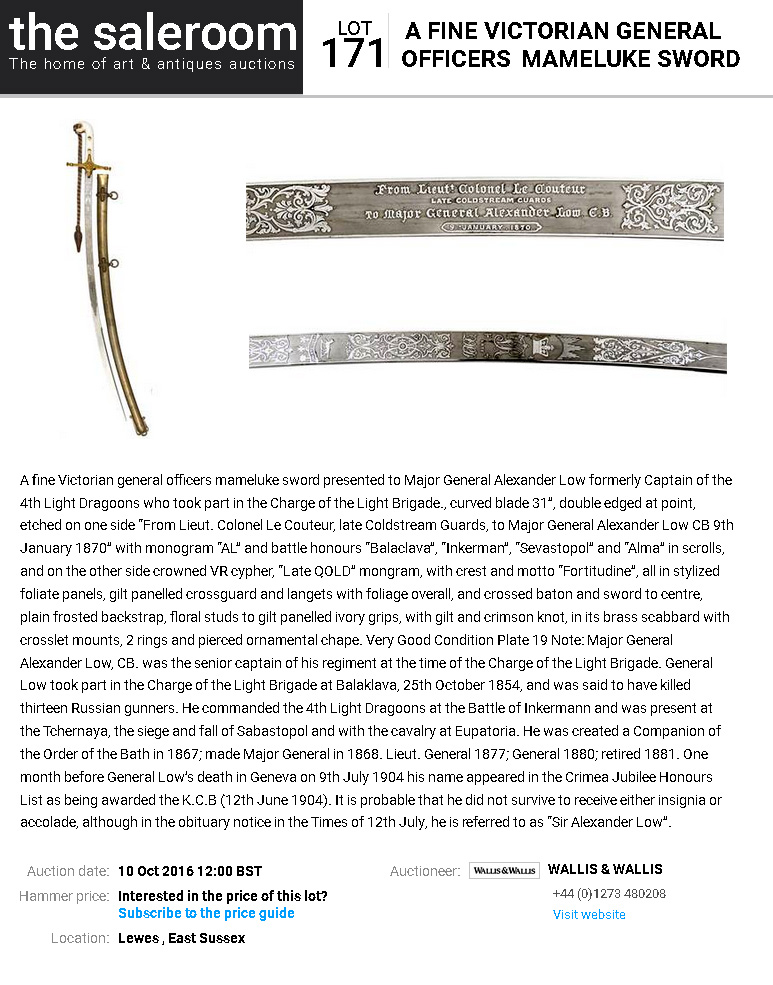
Commanded one of the two squadrons of the regiment at Balaclava, where he is said to have personally killed eleven Russians.
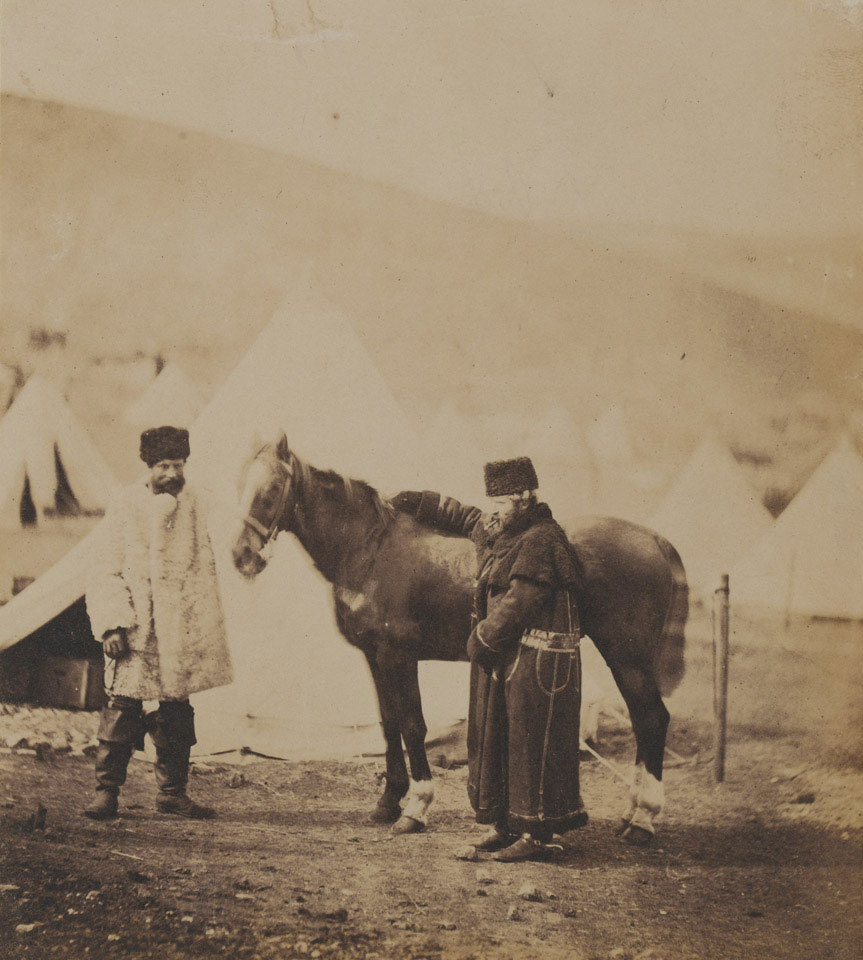
[PB: The National Army Museum catalogue summarises his career as follows.]
Alexander Low (1817-1904) joined the 4th Light Dragoons as a cornet in October 1835. By the time of the Crimean War he held the rank of captain. He fought at the Alma and commanded one of two squadrons of the 4th Light Dragoons in the Charge of the Light Brigade at Balaklava on 25 October 1854. Low went on to command his regiment at Tchernaya and Sevastopol. When his commanding officer Lord George Paget returned home, Low was promoted to lieutenant-colonel.
Advanced to colonel in December 1857, Low gained steady promotion over the following years, being appointed major-general in 1868, lieutenant-general in 1877 and general in 1881. He retired that year, but was also made colonel of his old regiment.
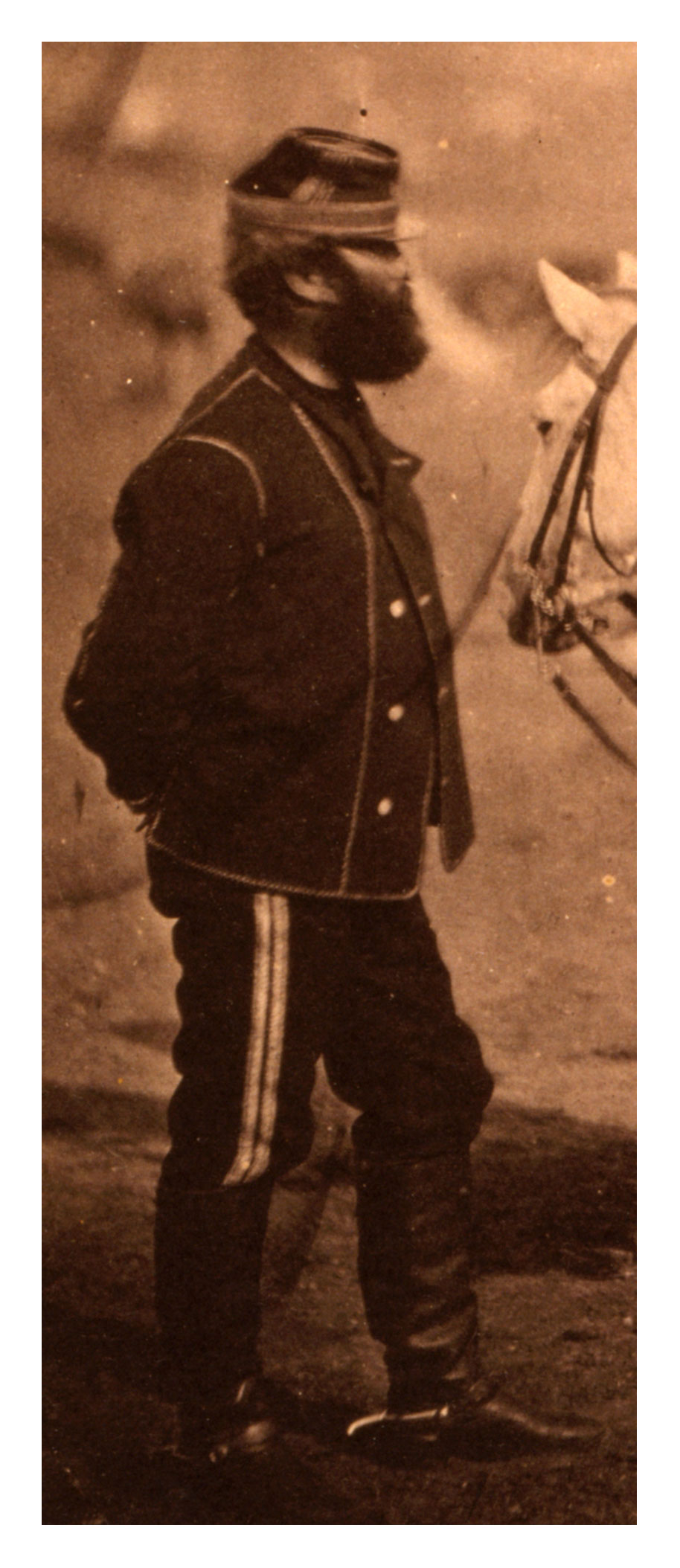
[PB: I think Fenton may have taken at least two other photographs of Low, including one with Scarlett, now in the Royal Collection (https://www.royalcollection.org.uk/collection/2500115/major-general-the-hon-sir-james-scarlett-commander-of-the-heavy-cavalry-brigade). Check and add.]
See the Record of George Paget (4th Light Dragoons) for details of a document relating to Low's purchase of the Lieutenant-Colonelcy of the 4th Light Dragoons. This document confirms his father as being Alexander Low and gives his address at the time (21st of March 1857) as 26, Queen's Square, Bath.
Colonel: 12th of December 1857.
On to half-pay: 4th of May 1860.
Major-General: 6th of March 1868.
Lieutenant-General: 1st of October 1877.
General: 22nd of May 1880.
Retired, and to the Reserve of Officers: 1st of July 1881.
Colonel of the 2nd Dragoon Guards: 17th of August 1874 — 26th of October 1881.
Colonel of the 4th Hussars: 17th of August 1874 — until his death.
Created a K.C.B. (12th of June 1904), when he was referred to as Sir Alexander Low.
According to Henry Smith Adlington, he was:
"A fine figure of a man, weighing fifteen stone — a most gallant fellow — and perhaps the best cavalry officer in the service."
While Lord George Paget had found him:
"[A] most excellent fellow — although he thought he fidgeted the officers a bit too much."
[PB: sources?]
From a reprinted letter [unknown source], dated 7th of December [PB: 1854?]:
"He is the only son of an old and much respected resident of this city [Bath]. Slightly above the middle size, his broad chest and shoulders, long arms, narrow girth, fine manly countenance with the long light Saxon moustache, form a figure the very beau ideal of the light cavalry . . .
After that terrible charge at Balaclava in which he slew and un-horsed several of the enemy, dealing sabre strokes, everyone of which carried death with it, he found himself alone amongst the enemy horsemen, three of whom bore down on the British cavalry-man, one on each flank and one in front.
Seizing his revolver, he shot the first two, right and left, and cutting down the third with his sabre; his good horse bounded over him, and although with a jaw broken by a grape-shot, carried his heroic rider safe into the English lines."
[PB, June 2014:: This account was taken up and illustrated on the front cover of The Patriotic Fund Journal, 6th of January 1855, with the title "Escape of Captain Low at Balaclava":

INCIDENTS OF THE WAR
(Escape of Captain Low at Balaclava)
Although many incidents have been related of the individual heroism of the light cavalry brigade in the memorable attack upon the Russian batteries at balaclava, there are few that can equal the feat of arms which our artist has selected for illustration.
Captain, now Lieut.-Col. Low, of the 4th Light Dragoons, actually succeeded in cutting his way out of the thick of the enemy after he had dispatched thirteen of his assailants.
This gallant soldier entered the service in 1835, and has constantly served, on the full pay of the cavalry, since that year.
Slightly above middle size, his broad chest and shoulders, long arms, narrow girth, fine manly countenance, with the long, light, Saxon moustache, altogether form a figure the very beau ideal of the light cavalry sabreur — and such he nobly proved himself on that day so fatal, yet so famous for the light cavalry of Britain.
After that terrible charge, in which he slew or unhorsed so many of the enemy, dealing sabre-strokes, every one of which carried death with it, he found himself almost alone among the enemy's horsemen, three of whom bore down upon the British cavalier, one on each flank and one in front.
Seizing his revolver, he shot the two first right and left, and cutting down the third with his sabre, his good horse bounded over him and, although with a jaw broken by a grape-shot, carried his heroic rider safe into the British lines.
[Source: The Patriotic Fund Journal, vol 1 no.4, 6th of January 1855.
In a letter to his family written on the 8th January 1855 (apparently referring to something seen in an English newspaper), Robert Portal said:
"Low's prodigies of valour, we can learn nothing of, as he has never mentioned a word about them, and in fact I believe that the whole story originated with some story that a Private Dragoon and his troop spread about."
In the same letter Portal wrote:
"We hear that poor Hutton died at Malta of his wounds, on his way to England. [This was not so.] It is very sad, as he was going on so very well, and was in such good spirits about himself."
[PB: Say a little more about Hutton. See ]
[PB: It seems unlikely, but had Portal had already seen a copy of the Patriotic Fund Journal? Did it perhaps reach the Crimea in a different form?]
Entitled to the Crimean medal with clasps for Alma, Balaclava, Inkerman and Sebastopol, the Turkish Medal, Sardinian Medal, Order of the Medjidie, 5th Class and the 5th Class Knight of the Legion of Honour. He was also nominated a C.B. on the 13th of March 1867.
Lived at 19, Kensington Gore, London, in 1902, but died at his residence, 50, Quai des Eaux, Geneva, Switzerland, on the 8th of July 1904 and was buried in St. George's Cemetery, Switzerland.
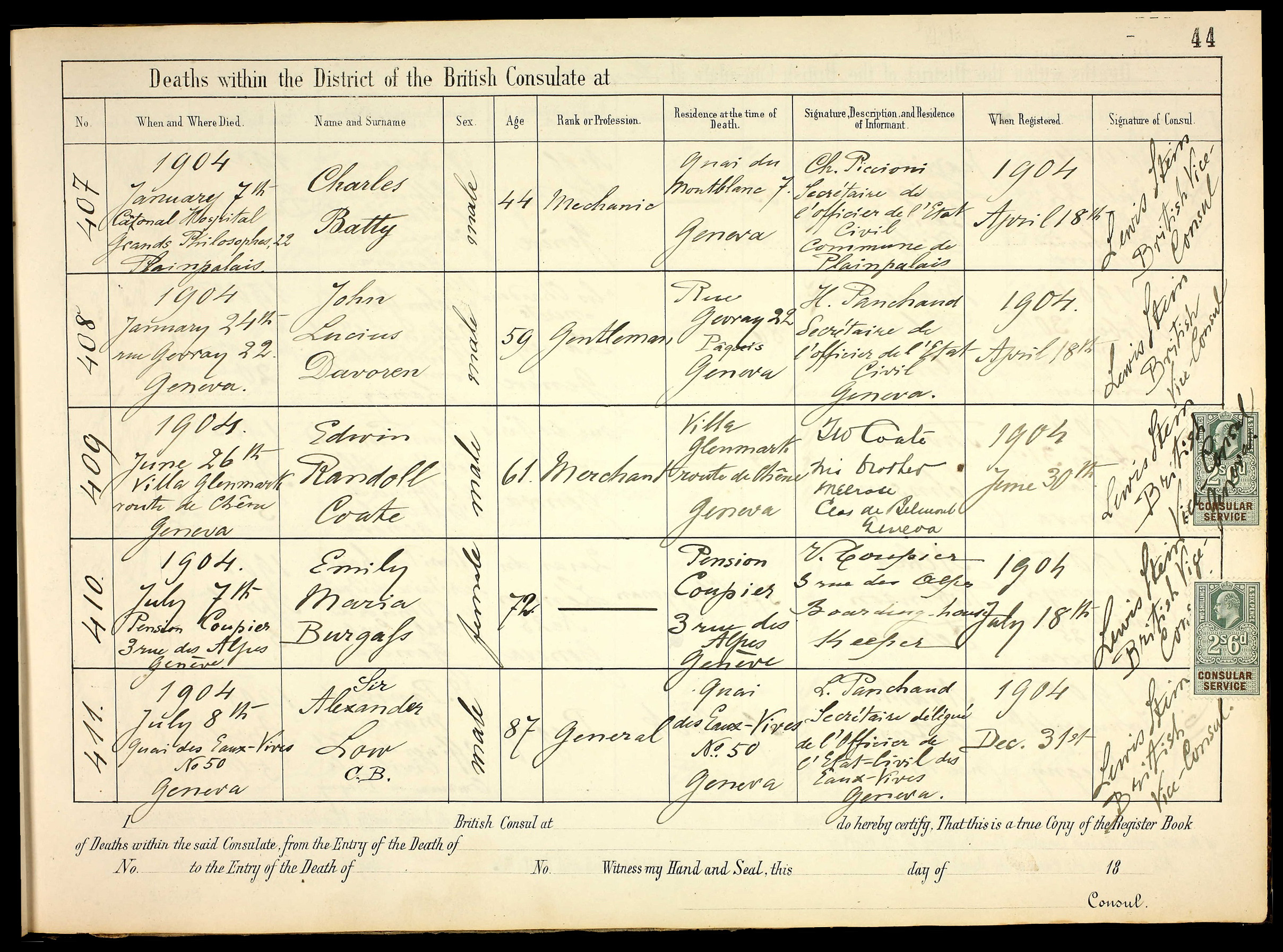
The cemetery is cleared every twenty years and the ground made up for re-burials. Now [1982] nothing exists to mark his grave.
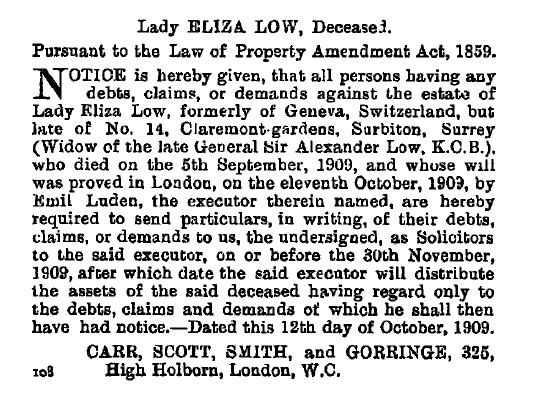
In his will he left his estate (of an un-specified amount) to his widow, Liza Low.
Wendy Leahy, August 2017:
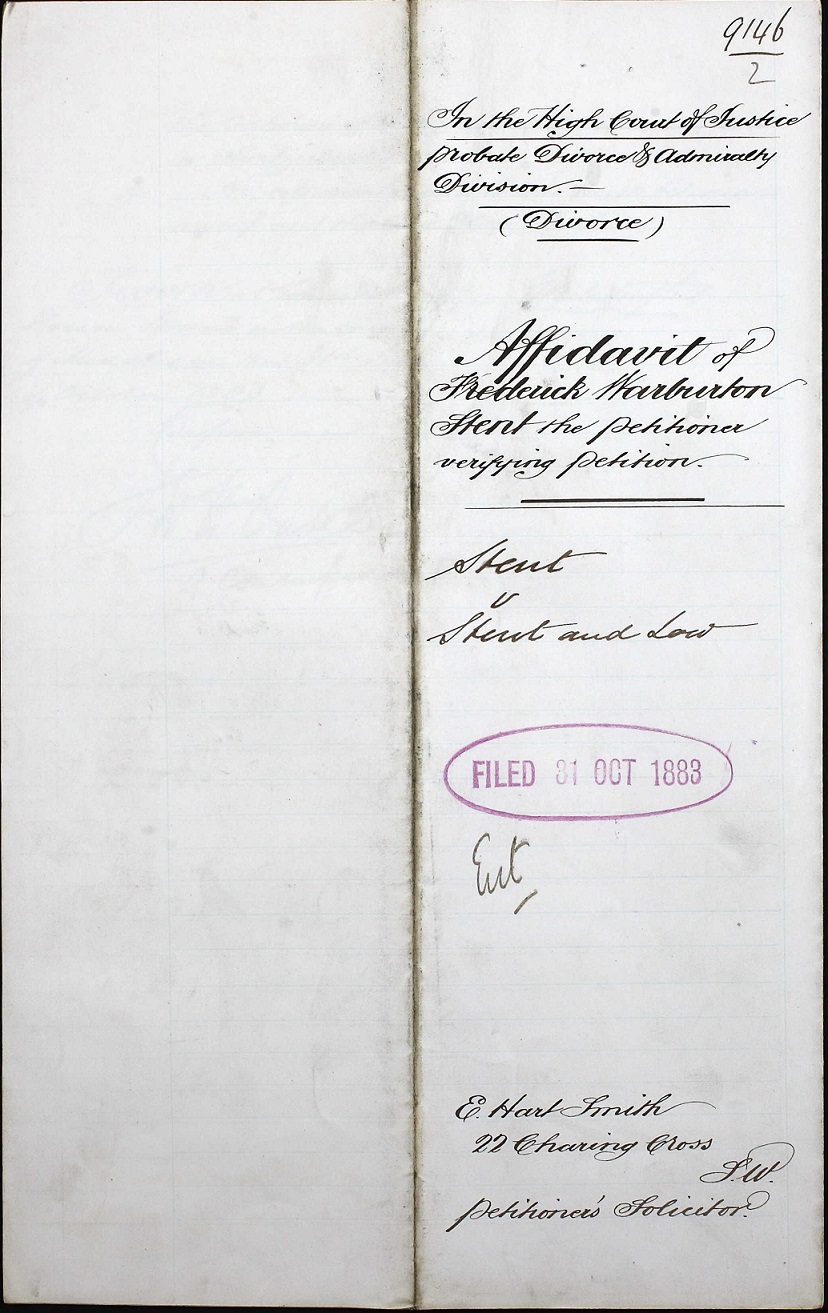
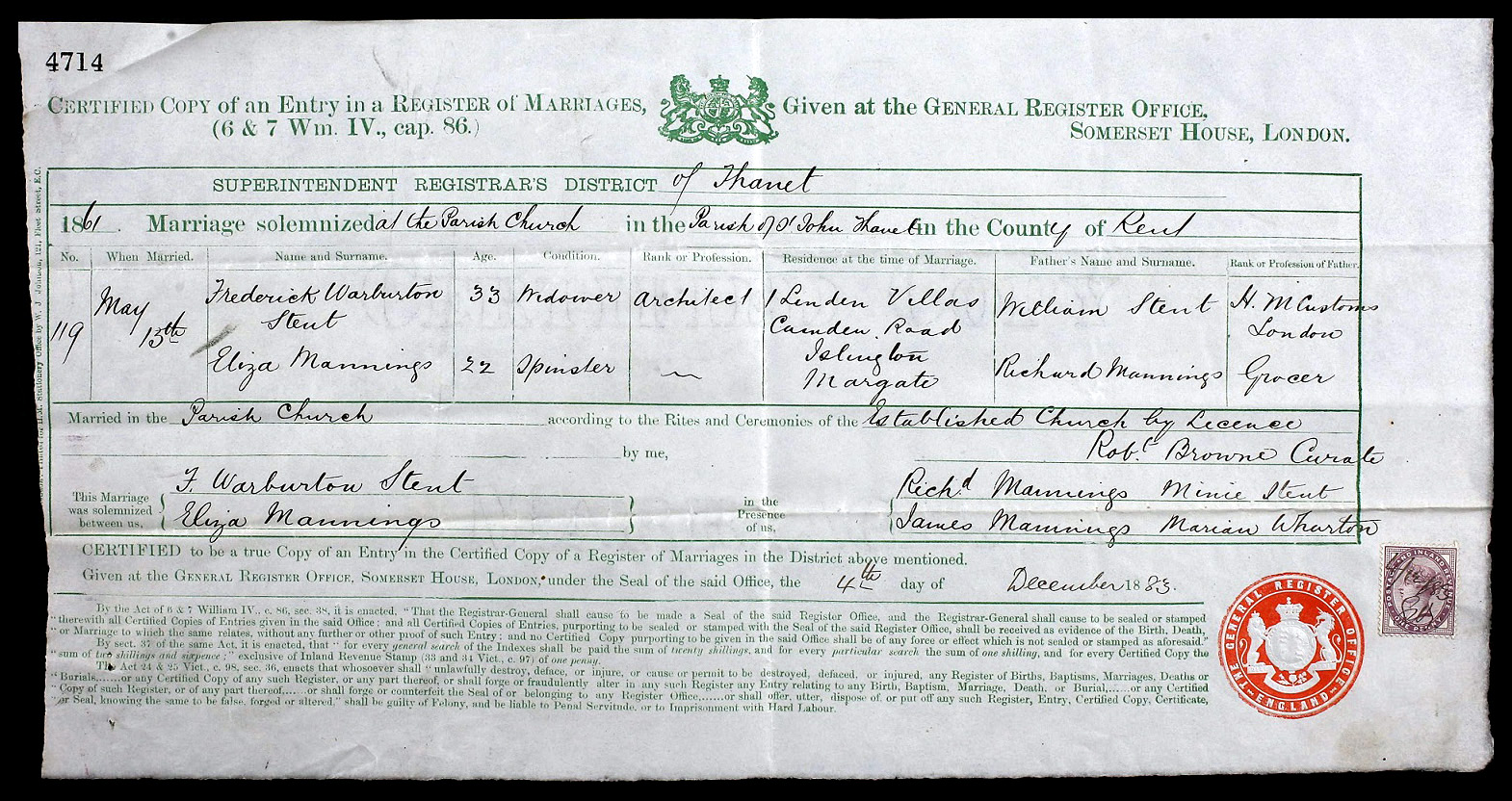
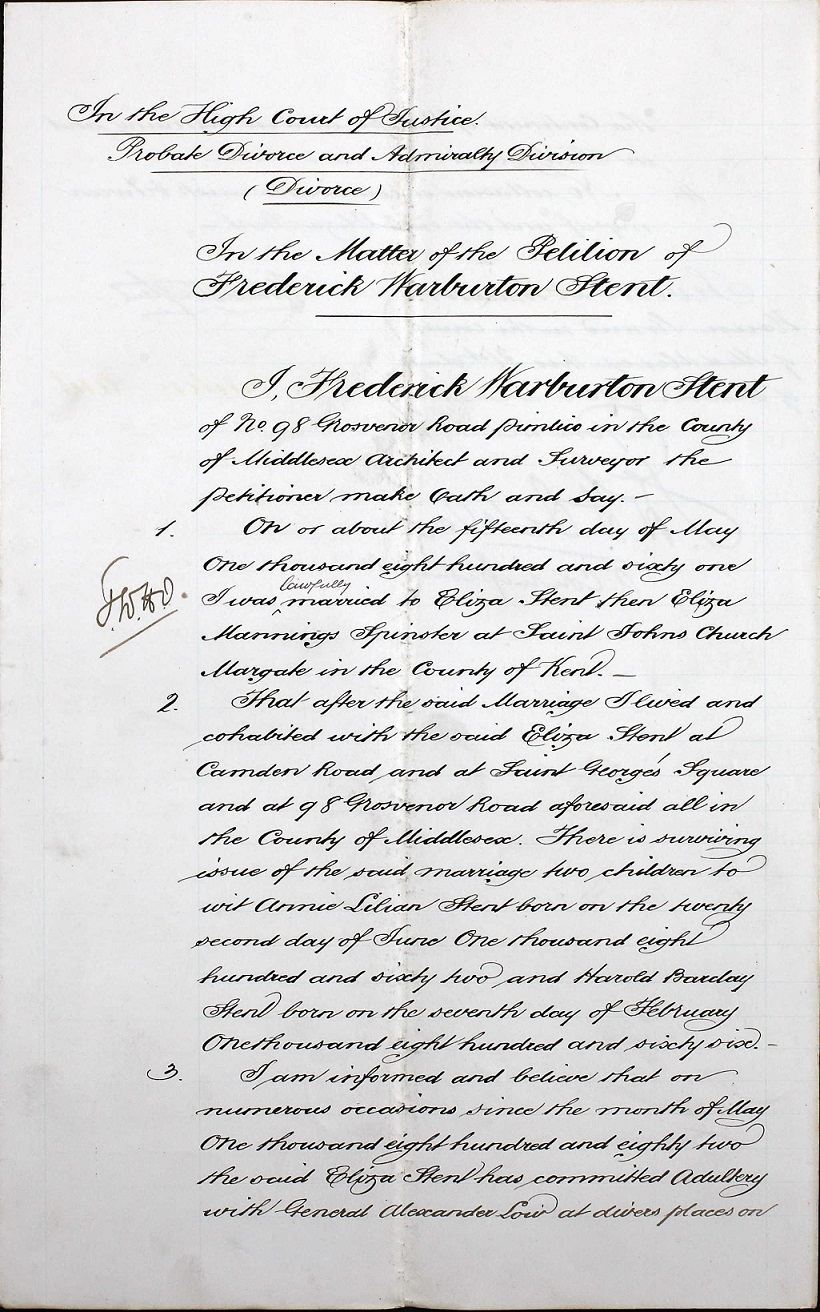
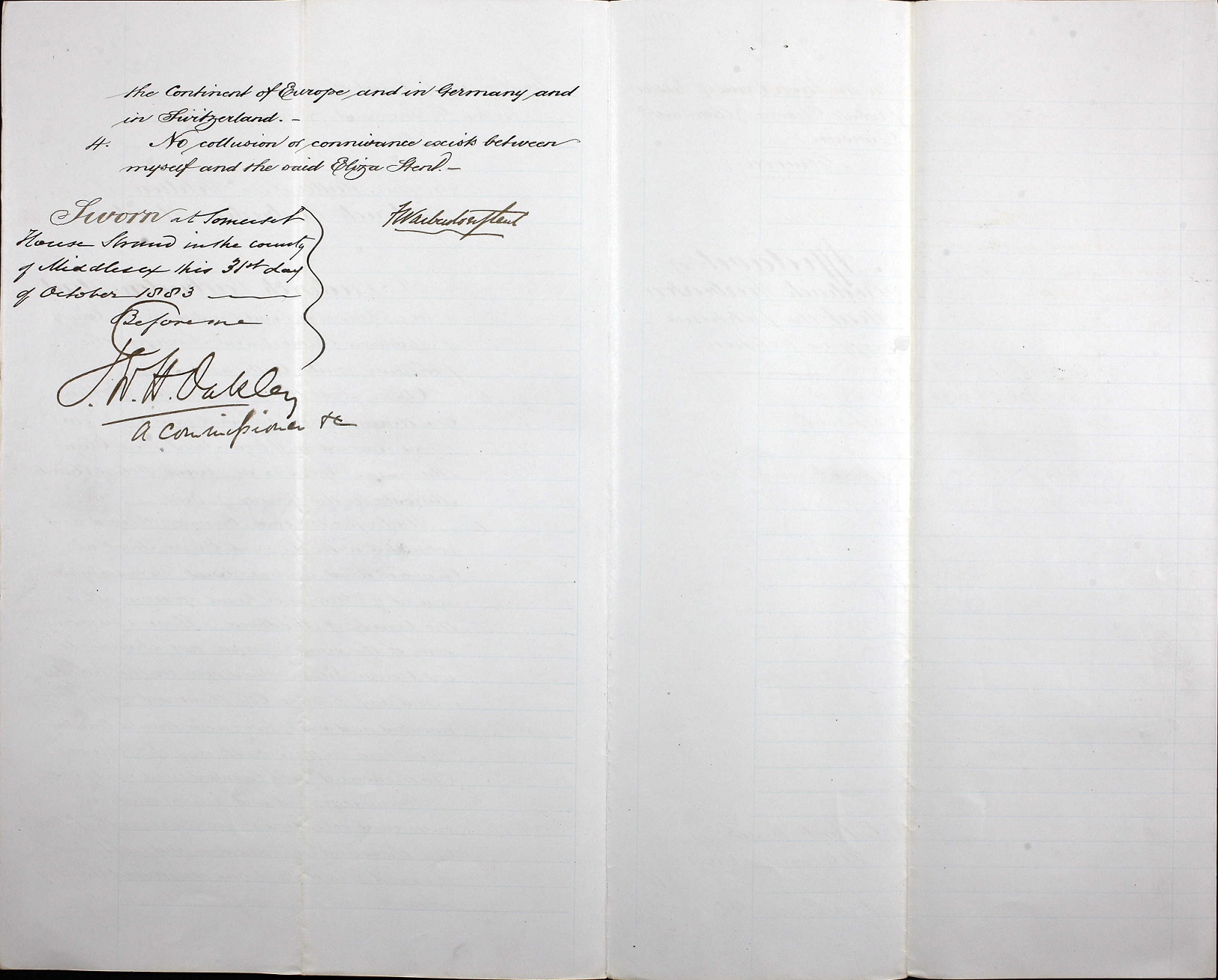
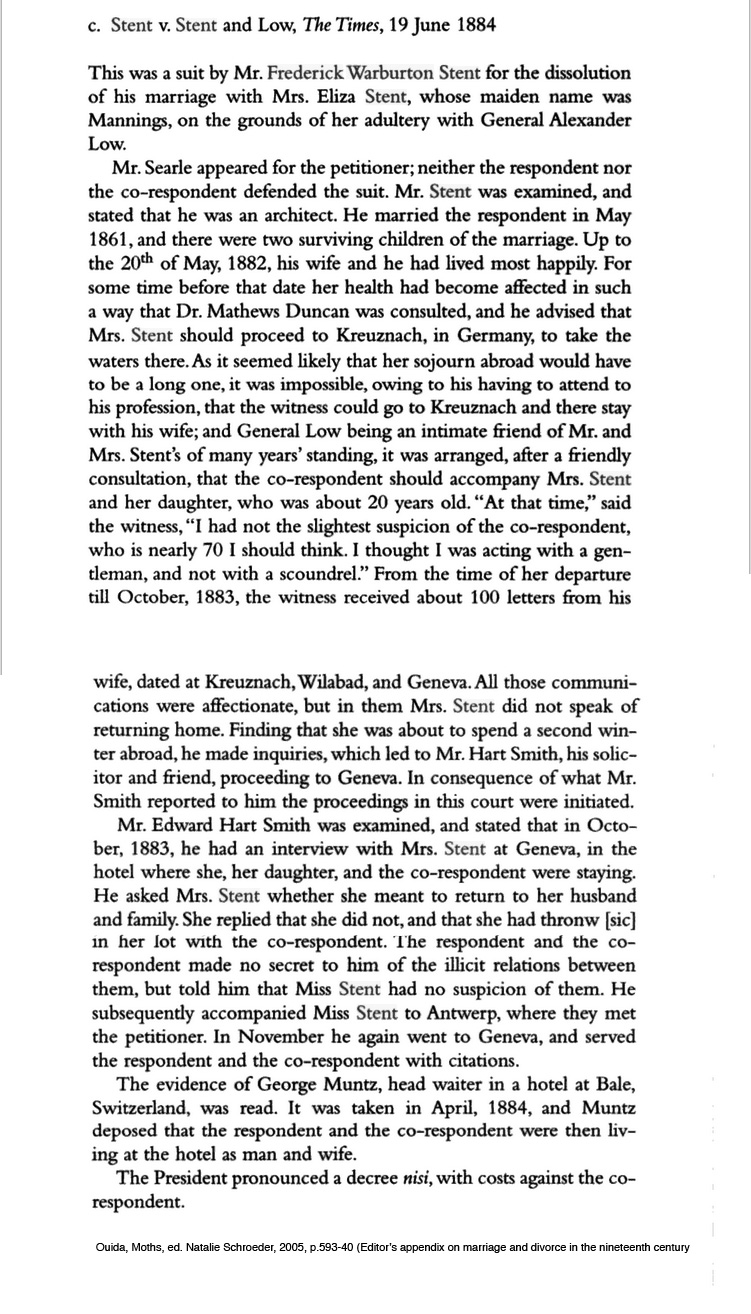
[Alexander Low, later General Low] was co-respondent in a divorce case . . . he ran off to Switzerland [PB: early 1880s?] with the wife of an architect, Frederick Warburton Stent, and she refused to return home. It may explain why he didn't really have a high profile after his retirement, and was only knighted about one month before he died. Poor old war horse . . .
The lady he ran away with was Elisa (or Eliza) Stent nee Mannings. Her cuckolded hubby was Frederick Warburton Stent, a notable architect. They had two children. Their daughter, born in 1862, was Annie Lillian Warburton Stent, who as a 20-year-old accompanied her mother and Low, a family friend, to Germany. Elisa was unwell and went for curative reasons. They ended up in Switzerland. The husband sent someone to check up on his wife who discoverered she and Low were living as a married couple. The daughter was returned to England and divorce proceedings began.
The daughter later married one Emil Luden, who was later an executor for Elisa's will, and they lived in Holland. The son, born in 1866, was Harold Barclay Stent, who settled in England and was a civil engineer. Frederick Stent died in Hilversum in 1915 (hmm, middle of the war, interesting) so it seems that the family had more than one connection with the continent. Stent was known for work on the Old Parliament Buildings in Ottawa (my great grandfather was marble mason on the Old Parliament Buildings in Wellington!) and also, funnily enough, the Aldershot Military Hospital, 1858.
Lady Elisa died in Surbiton in 1909.
[WL, August 2017:]
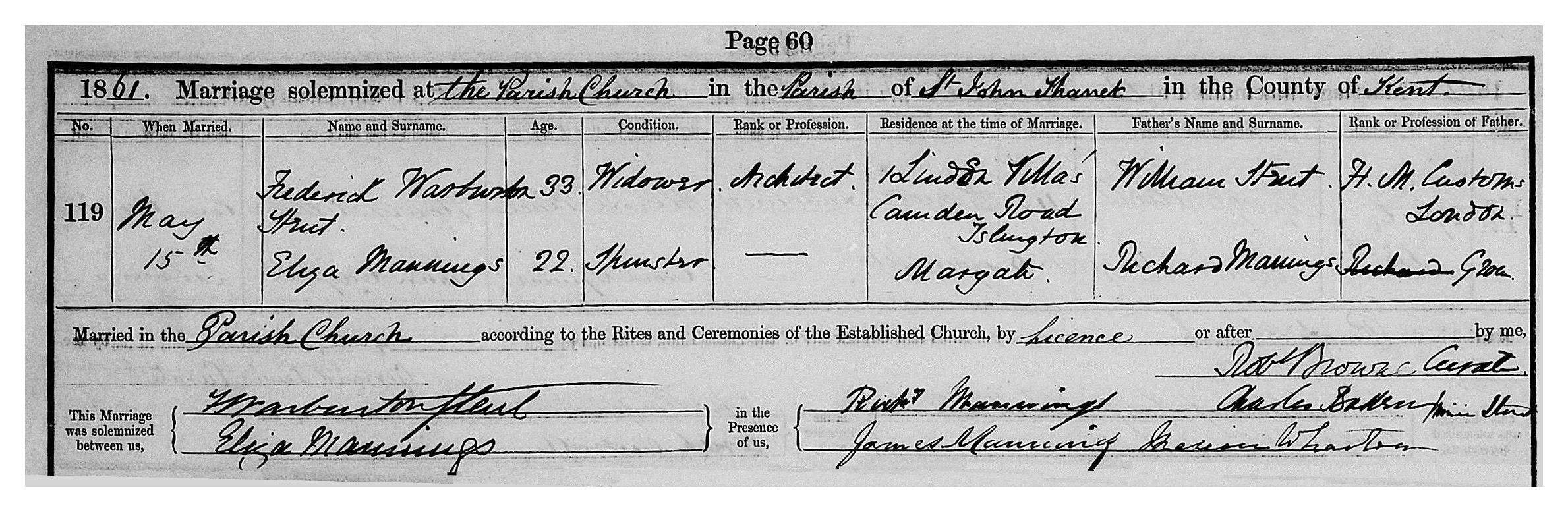
[PB, August 2017]
https://books.google.co.uk/books?id=Dtk0Xivx_OQC&pg=PA593&lpg=PA593&dq=Frederick+Warburton+Stent&source=bl&ots=KnMhWfnxK3&sig=DgN5CoJ4oR75XMYYzL-YvQ5oKzs&hl=en&sa=X&ved=0ahUKEwjpqfit587VAhUqJsAKHahkDfIQ6AEIKzAB#v=onepage&q=Frederick%20Warburton%20Stent&f=false
https://en.wikipedia.org/wiki/Ouida
The editors are very grateful to Wendy Leahy for the considerable amount of information she has provided about Alexander Low's relationship with Elisa Stent.