Death & burial
Died 13th of January 1904 in New South Wales, Australia.
He died at Newtown, Windsor, N.S.W. on the 13th of January 1904 at the age of 74 years, from "Cardiac disease". He was buried in the Church of England Cemetery at Windsor on the 14th of January 1904. A gravestone was erected, (see copy of a photograph of this in the 17th Lancer file).
As is usual with most of the Australian death certificates considerable additional information is recorded and this particular certificate confirms that he was born at Killarney, Ireland, and that he was the son of John Lewis Berkleman, a "Military Officer" and his wife, Frances, nee Herbert. (See copy of this certificate in the 17th Lancer file.)
Obituary notice and funeral report from The Richmond & Windsor Gazette, Saturday 23rd of January 1904:
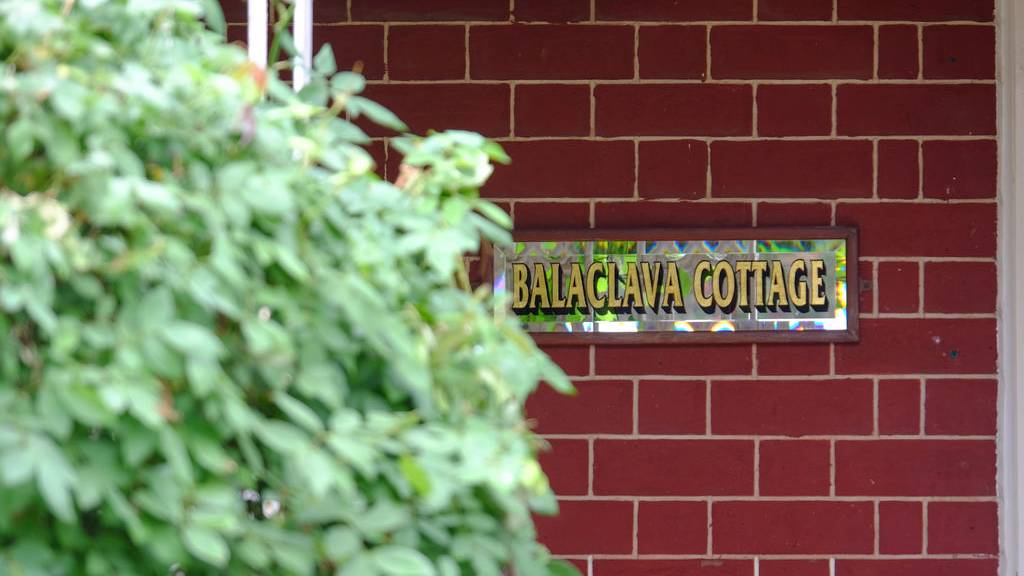
"Obituary. No more respected or esteemed personality than the late Mr. Arthur Berckelman, senr. has ever been called from amongst us. As was briefly stated last week, he passed peacefully away on Tuesday night or Wednesday morning after a long and honoured career, at the age of 74 years. As was well known, Mr. Berckelman, was a Crimean and Balaclava soldier and his home at Newtown, Windsor, was called "Balaclava" in memory of the memorable "Charge of the Light Brigade" in which he took part. He was a man of wonderful vitality and retentive memory, and his graphic descriptions of the scenes on the battlefield which he had witnessed and the adventures he had passed through — the very recital of them made strong men quail.
Like his familiar figure — straight and upright — so was his character. During our long residence at Windsor we have never heard one harsh word spoken against the late Mr. Berckelman, but we have heard many high words paid to his honesty, his manliness and his goodness of heart. And he never uttered a harsh word against his fellow-men.
His end was a peaceful one. Up to the last he was able to get about quite nimbly, and retired to rest as usual on the night of his death and probably passed away in his sleep.
He held two war-medals, for distinguished service in the Crimean and Franco-Prussian wars respectively.
He leaves behind a widow and family than whom none are more respected in the district. Some of his sons have attained positions of distinction in the State. The family includes, Mrs. John Mahoney (Pitt Town) Mrs. R. Stubbs (Windsor) Mr. A.J. Berckelman, J.P. (Windsor) Mr. William Berckelman, (Leichardt) Messrs. Aldolphus, L.J. and Thomas Berckelman, (Sydney) and Mr. Percy and Miss Louise Berckelman, who reside at home.
The funeral took place on Thursday afternoon of last week and was a large and most representative one. The members of the Richard Coley Lodge Freemasons, Half Squadron Ist Australian Horse and "A" Company of the Infantry Regiment marched before the hearse to St. Matthew's C. of E. Cemetery, headed by the Windsor Brass band. The pall-bearers were Captain B. Hall, M.L.A., Captain J.J. Paine, J.P., Messrs. W. Moses, senr. J.P., and G. Boyd. In the church the Revd. W. Fielding delivered a splendid address and touched on the Christian life and manly attributes of the deceased. The impressive Masonic service at the grave-side was conducted by the Very Worshipful Brother J.J. Paine, P.D.G.I.W. The duties of undertaker were carried out by Mr. J. W. Chandler, and the family received a large number of wreaths, and very many letters and telegrams of condolence.
On Sunday afternoon there will be a military parade and memorial service at St. Matthew's, in connection with the death of the late Mr. Arthur Berckelman."
There is a report of this parade and service, in the The Hawkesbury Herald for Friday the 29th of January 1904, in the 17th Lancer file. [TO BE TRANSCRIBED]
Extracts from The Richmond & Windsor Gazette, 6th of February 1904:
"It would have been a pleasure for me to have been the first to write an obituary notice of my old fellow Crimean man had I known enough of his personal career prior to 1853, and subsequent to his arrival in New South Wales some time in the fifties — what year I am unable to say of my own knowledge — although his sons should be able to furnish that information.
My own knowledge of Mr. Berckelman was confined to the few years I have resided in Windsor, and it was owing to the fact of my having been knocking about in the Black Sea littoral (both by sea and land) during that great war that the ex-lancer and I were more than ordinarily chummy, for Arthur Berckelman was a taciturn man and kept what he knew to himself. Thus, although I knew he was an old Balaclava man, it was not until the affair of the prisoners escaping from Windsor Jail that I saw his medals or that we had a conflab about the "glorious days of 1854-56" and then I found the old warrior talkative enough — for not only did I remind him of the many happenings in the trenches, the skirmishes with Cossacks at the back of Sebastopol up on the Tchernya road, but with a certain affair at Kerisch [PB: obviously Kertch, but where did the error originated — in the original account or in a later transcription?], which he had almost forgotten.
And when I told the story of the regimental butcher leaving his slaughtering, slinging his long legs over a bare-backed troop-horse and joining in the pursuit of a marauding troop of Cossacks, with his arms crimsoned in blood, and both hands clasping two sabres — one his regulation weapon — the other an old one which he had been using as a cleaver — the old horse knew his way about, and needed neither bit nor spur, and the pressure of the butcher-trooper's knees steered him into the thick of it, much to the consternation of the Cossacks, who, seeing a huge red-headed, red-moustached "Inglese man" (by the way I believe he was an Irishman) waving two swords and with bloody arms bared to the shoulder, and yelling out the regimental war cry "Death or Glory, boys," must have thought that all hell had broken loose — the old trooper's martial ardour was so aroused that he exclaimed, as he gripped me by the arm, "Bedad, you have got it pat; I was there and saw it all — just as you say." He then entered into further details and gave me the man's name, which began with either an "O" or a "Mac." [PB: It didn't. This was 598, Private John Vahey, 17th Lancers.] I then referred to some other matters connected with his regiment when it was stationed at Brighton.
Also about the notorious Lord Cardigan who was Colonel-in-Chief of a Hussar Regiment — also in Brighton at the time — and the old trooper endorsed all that I had said. It happened this way: Brighton was my home, and after getting my discharge from the navy in 1853 (owing to serious injuries sustained during the big Review at Spithead — the biggest muster of ships there had ever been up till then. I was recruiting my health after leaving hospital convalescent, by enjoying sea-bathing and plenty of ozone on the famous Downs on the edge of the great cavalry barracks on the Lewes Road were situated. As on my outings I often strolled out that way — still wearing my naval rig; I got to yarning with the sentry, and finally, was introduced to the trooper's mess. I was only a boy, be it remembered, but I felt very mannish, and my rig was my passport.
Now, to my knowledge, I never saw Trooper Berckelman on these occasions, but I knew several by name and when I named them Mr. Berckelman confirmed the likeness I drew of them. At that time, war was imminent — it might happen at any moment, and much warlike talk was indulged in by, not only the Lancers at Lewes Road and the Hussars at the Pavilion Barracks; the Militia met the artillery men at the battery in King's Road and the Royal Fencibles and Veterans, but every college and schoolboy in Brighton — to say nothing of the famed fish-women on Brighton Beach, whose "langdwige" I fear would have shocked even the late Daniel O'Connell's termagant.
Anyway, war was not declared until March 22nd 1854 — although the Baltic Fleet (in which I ought to have been and hoped to be) left Spithead on the 11th of that month. War was precipitated by the destruction of the Turkish fleet by the Russians at Sinope.
Early that year I joined a brig and made a few trips around the coast until a larger vessel of the owner's came home from New York. In her I was transferred, and after taking on some frames of wooden houses at Limehouse, we went round to Cardiff, filled up with coal and sailed for Constantinople, via Malta and Corfu. After discharging our coal at Beicos (a coal depot in the Bosphorus near the Black Sea) we were towed up to Balaclava harbour, which by that time had been seized by the British as a Depot and it was used as such during the whole war. It was our barge (I mean the ship's) the whole time — for we sailed or were towed from it from Sinope, Trebizard, the Danube, Sea of Azof, Constantinople (Scutari, with sick and wounded) just as we were ordered — carrying corn, cattle, troops — both living and dead, for they were often dead before they reached that famous hospital on the point opposite the Golden Horn and known as Scutari.
We were at Scutari when the battle of the Alma was fought and off Balaclava when Trooper Berckelman "rode into the jaws of death with the Six Hundred." We rode out that terrific gale in November — nine days after Inkerman was fought — and saw several ships go ashore, the big steamer "Prince" amongst them — and saw the Cossacks thronging the shore seizing the bales of blankets, casks of wine, etc., etc., and hacking the bodies of our dead seamen as they were washed ashore. It was an awful gale, but, with topmasts housed and lower wards bent down, our anchor held bravely.
We conveyed a number of the Six Hundred to Scutari, and there I saw Miss Florence Nightingale. I saw the second attack upon Sebastopol by the Allied forces early in the next year, April, I think — and was at the taking of Kerisch [Kertch] some time in June, being coxswain of the first boat to land — our cargo being Turks — all raw-berries, and a very poor lot indeed; we had to chuck them overboard, for they would not land themselves. The water was breast-high and a sharp fire was going on all the while, mostly overhead from the paddle box sloops lying off. The transports were at the rear of them for safety and we (the boat's crews) had to thread our way through all these ships and land the troops on an open beach.
It was a tame affair however, for when we landed the Russians cleared off — all but for one man, and he, like the famous Roman of history, did his "sentry-go" just as if nothing particular was on, and to our men's discredit, let it be said, they made a target of him — but couldn't hit him. I remember a man — he must have been an "old Indian," for he was almost black — and "bearded like a pard"- grabbing me by the shoulder and saying, "Stand still, youngster, while I put the come hither on that fellow"; and he rested his "Minie" on my shoulder and no doubt he would have potted the "Muscof" only that an officer knocked up the man's rifle with his sword. A few minutes after-wards our chaps were rushing to the brave fellow to shake hands with him — the Russian, I mean. I do not think the cavalry came until some days later.
We were there several weeks doing nothing in particular — except going ashore and running no end of risks — in fact had several hair-breadth escapes, for the Cossacks were most predatory, and bold in the extreme. The country was a huge wheat field, much of it ripening and most of it was burnt where it stood, the sole object seeming to be its destruction.
It was whilst the Lancers were thus foraging that they were set upon by the Cossacks and being unarmed, some with reaping hooks — either sickles or old swords — and their horses encumbered with forage nets and unbridled, they retreated — only to arm and reform and charge like a whirlwind. This was the occasion I have referred to and in which the late Mr. Berckelman took part.
Being ashore every day I saw these things, and thus I am able to write them down in detail. I was home again before the end of the year; though I believe the Lancers were still there to the finish, in February or March of the next year. Whether the late Mr. Berckelman left the army then I could not say — though he must have done so have to have been in the colony as early as '55 — which I very much doubt — the local Freemasons records not-withstanding.
I have seen and handled the late Mr. Berckelman's medals but I do not remember that one of them was for the Franco-Prussian War. Both were Crimean medals — or rather one was for the Balaclava affair. The Franco-Prussian war was in 1870 — sixteen years after Balaclava. How is it possible then that he could have been fighting for either France or Germany when he was a member of the New South Wales Police Force.
Both Windsor papers seem to have got things messed up in regard to the late Arthur Berckelman's career. Had the ex-lancer been in any other war than the Crimea he most certainly would have told me, and he never did. He may have seen some home service — either in England or Ireland — prior to the war with Russia, but I am inclined to think he never saw service abroad until 1854 and none after 1856, for though reticent about his private life he used to talk very freely with me about his military career, knowing that I had seen some service myself, and had mixed a great deal with the "swaddies".
However, he is gone from us, and all of us remember him as a quiet, unostentatious man, a faithful and trustworthy public servant, and a good citizen — and judging by the family as we know them, a good father.
In his young days (48 from 74 leaves 26) he must have been a fine stamp of a man; and most of the Lancers as I remember them in those days were young men — fine upstanding young fellows and weighty, though called "Light Cavalry" — and the Brigade embraced Lancers, Hussars and the Light Dragoons while the "Heavies" were the Dragoon Guards — the 1st, the Scots Greys and Enniskilling regiments representing English, Irish and Scotch.
It is quite possible that I may have seen Mr. Berckelman in his Crimean days but to me as a youngster one soldier was as another. I loved them all — either cavalry or foot — red-coated marines or sombre 60th Rifles. It was a time of intense excitement, and my young blood was all aflame. Everybody in uniform fraternised; we jabbered away together in what was a mixed gibberish to which the "Lingua Franca" of the Mediterranean was a refined tongue — for it comprised English, French, Sardinian, Greek, Russian, and in this poly-glot we sang each other's national songs; "God save the Queen," "Partant pour la Syrie," ("The Marseillaise" was tabu just then), "Hail Columbia," "The Red, White and Blue," "The Star-spangled Banner" and other songs of all nations and in a general way we — that is, the crowd of foreigners — made the picturesque home of the Turk a veritable hell upon earth, doing what we dared not do elsewhere — not at Balaclava anyhow, for martial law prevailed there and we would have been shot. But Constantinople was the centre of the world, the abode of all its infamies, and the refuge of the world's scum; and the refuse of the great cities of the world held high levee in Perea, and even intruded upon sacred Stamboul.
Our old friend and I saw these things — I more than he — for I had better opportunities — but we often talked about them and the iniquities of "Budhre" (more often called "Butre") and Gallipoli. But his day is done; he ran the gauntlet at 25, approached as near death as ever man approached and survived; and at 74, after a peaceful retirement of twenty years succumbed to the inevitable Death, which he defied in that dark valley running up at the rear of Balaclava town. Then he tasted the glory; now he felt Death, and he knows what there is beyond.
When he rode up that valley in the full knowledge what was at the head of it, Arthur Berckelman and his comrades gave lip to the Regimental war-cry — "Death or Glory!" and many a skull and crossed-boned helmet was trodden under foot and many a young life was cut off by round-shot. Let us hope then, that now he enjoys another Glory, in which there is no Death and that he stands well with the great Commander-in-Chief."
[PB: THE ABOVE IS A MOST AMAZING PIECE OF WRITING! YET THERE IS NO NAME. CAN WE FIND OUT WHO WROTE IT?]
In the issue of the same paper of September the 25th of 1886 appears the following Police News:
"Before the P.M. Messrs. J.B. Johnston, T. Primrose, A. Tuckerman and D. Holland, J.P.'s, — John Duffy, alias James, was brought up on remand from Saturday and charged with breaking H.M.'s Gaol at Windsor on the night of the 7th or the morning of the 8th September inst.
Acting Gaoler Arthur Berckelman was first examined, his evidence being to the effect — On the night of the 7th inst, at 10 o'clock, he had gone all over the gaol and examined all fastenings of cell doors and gates, as had been his usual custom for the past six years and found everything secure; he then went to bed. He was not disturbed during the night by any noise and knew nothing of the prisoner's escape until Warder Gillis told him the next morning what had occurred.
Warder Gillis's statement was to the effect that he had locked in the prisoners in Cell No 6 — which is situated on the upper corridor of the gaol; — the cell was occupied by the prisoners Murley and Duffy and a third prisoner named Brennan. When he put the prisoners in the cell at 4.30 p.m. on the 7th inst. he saw nothing by which prisoners could cut their way out; everything was all right, as far as he could see. When he came to the gaol the next morning at 6.30, he found the cell door ajar and Brennan in the cell but the prisoners Murley and Duffy were not there. He noticed a small pile of chips on the floor and the door-jamb opposite to where the bolt shot into the socket, cut away. He reported the matter to the senior warder and then rang the bell for the Gaoler.
The prisoners could get out by no other means except by cutting and breaking the cell. He also saw the big gate of the Gaol-yard open, the lock having evidently been picked.
Warder Docker gave corroborative evidence; he remembered the prisoners going upstairs before Warder Gillis on the evening of the 7th inst. but he did not assist to lock them up.
The prisoner in his cross-examination of the witnesses asked whether prisoner Murley was in the habit of being in the store yard, and if so, could he get hold of chisels or knives. He also accused the Acting Gaoler of not giving him a good ration, and having kept him without tobacco. This was denied by Acting Gaoler Berckelman.
The case closed, and the Police Magistrate asked the prisoner in the usual manner if he had anything to say, and the prisoner intimated that he wished to make a statement, which was taken down.
The substance was as follows; He was not sentenced to Windsor Gaol; his ration of food was not sufficient — he did not get as much to eat in Windsor Gaol as he got in others, and was deprived of tobacco; prisoner Murley was a wardsman, and had opportunities while cleaning out the ward, and of trying the locks. One day, about a fortnight before their escape, Murley said to him, "If you'll come with me, I will give you your liberty. I have tried the locks, and I can pick them all. I can get a knife and cut the way out — and once in the store we can get plenty of clothing." He (Duffy) then asked if he could get a ladder? — and Murley said, "Yes, but I can get out without one!" He was denied privileges which he was entitled to as a prisoner, and the Acting-Gaoler didn't treat him well: Murley told him that he could get tobacco from the store at any time without the Acting-Gaoler seeing him. He had no more to say ... Prisoner was then committed to take his trial at the Quarter Sessions on the 5th of October next."
And from the Editorial that appeared in another column of the same paper:
"The result of the investigation held before the Police Magistrates last week, with regard to the escape of the prisoners Murley and Duffy, had been the temporary appointment of Constable Murray to the charge of the Gaol. Why Mr. Berckelman is suspended it is difficult to conceive. Without saying on whom the blame should fall one cannot but wonder why so dangerous a prisoner as Duffy should not have been kept apart from the other prisoners, and besides, it looks something like bad discipline when three men are turned into a cell together without being thoroughly searched.
If the Government neglects to furnish gaols with proper fastenings, and uses wood where there should be iron, then a much more important officer than a gaoler should be held responsible. At any rate, we fail to see why one man should be the scapegoat for other people. These excerpts answer for themselves, and throw a light upon matters connected with the late Mr. Berckelman's retirement from the Public Service."
Extract from a newspaper report (of unknown date and source but believed to be from one circulating in the Canterbury area of New Zealand around May/June 1890) that was found in a "scrap-book" formerly belonging to James W. Wightman of the 17th Lancers:
"The "Noble Six Hundred" — Now that so much painful interest has been revived in the famous "Charge of the Light Brigade," it will be interesting to learn the impressions made by that memorable affair upon one who actually took part in the Charge. We learn from the "Australian Star" that at an entertainment at Windsor, New South Wales, the other day Tennyson's poem was recited and at the close Mr. M.A. Berilman [sic] a "Light Brigade" survivor, gave his personal experiences.
He said that previous to the famous charge the Light Brigade was located adjacent to the Russian posts, and did all they could to make them commence hostilities. On the eventful morning the Russians came on and appeared to him to be in endless numbers. After various manoeuvres the order came for the Light Brigade to go at them, and all were surprised. The Six Hundred sat as firm as rocks, and had nought to do but obey the order and advance. When halfway across the plain, the narrator saw fire belch forth from the cannon in front, little thinking that the Russians had also cannon on the right and left, which opened up a cross-fire, soon after which a piece of shell hit his horse's chest, and he lay there for some time, stunned.
When he recovered he found his comrades had gone, and looking around saw the Cossacks busy and riderless horses everywhere, and with prostrated men on every side. He went to catch a horse and a cannon ball knocked the dust up at his feet. He caught a horse and when mounting him two Cossacks went for him. He kept them on the right, and one, the more daring, rushed him and the narrator's lance went right through his body and nearly unseated him.
They were recalled, and though it was considered presumption for 600 men to tackle 35,000 their end had been accomplished, though with a great sacrifice, for when they mustered there was only a handful of the gallant band remaining. Others had been mown down by the relentless fire of the enemy. The narrator came out without a scratch. The narrator was attentively listened to and much applauded."
Further information
In 1987, a Mrs. M. Berckelman, whose husband was descended from him as a great-grandson, wrote from Mosman, South Australia, seeking further information of anything known of him. The family were able to give virtually a complete picture of his life after arriving in Australia, although it had not yet been possible to discover the exact date of his arrival in the country.
A copy of a Certificate of Service, shows that he joined the New South Wales Mounted Police as No. 734 Arthur William Berkleman on the 9th of February 1858, when his physical description was given as being 5' 10" in height, with a fair complexion, light blue eyes, and dark brown hair. He was promoted to Senior Constable on the 1st of March 1862 and left the service "On pension" on the 30th of September 1886. His Districts of Service were Western (H.Q. Bathurst) and Eastern (H.Q. Depot) from the 1st of May 1868.
On the 20th of August 1859 he married Mary Ann Bressington at Armidale (according to the rites of the Church of Scotland) where he was probably serving as a Gold Police Trooper, the Armidale records showing that he was at Armidale, a gold area near Uralla, south of Armidale. Their first two children were born there but the family are believed to have later moved to Eogowra, near Forbes. A total of seven children were known to have been born to the couple.
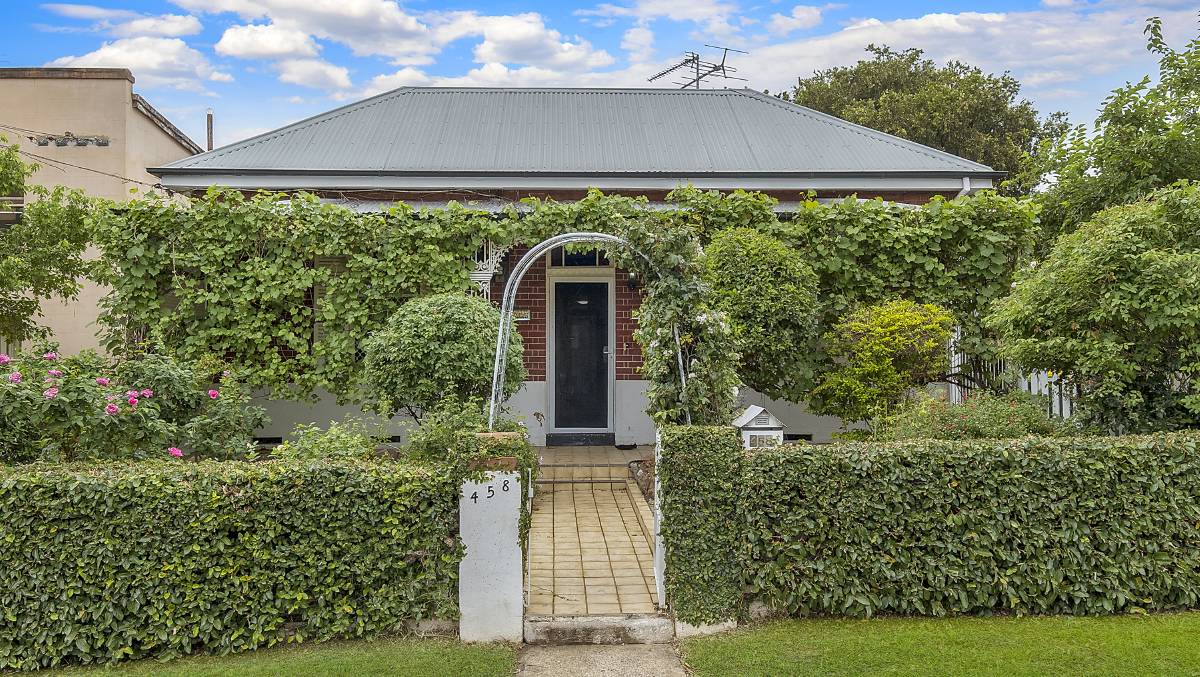
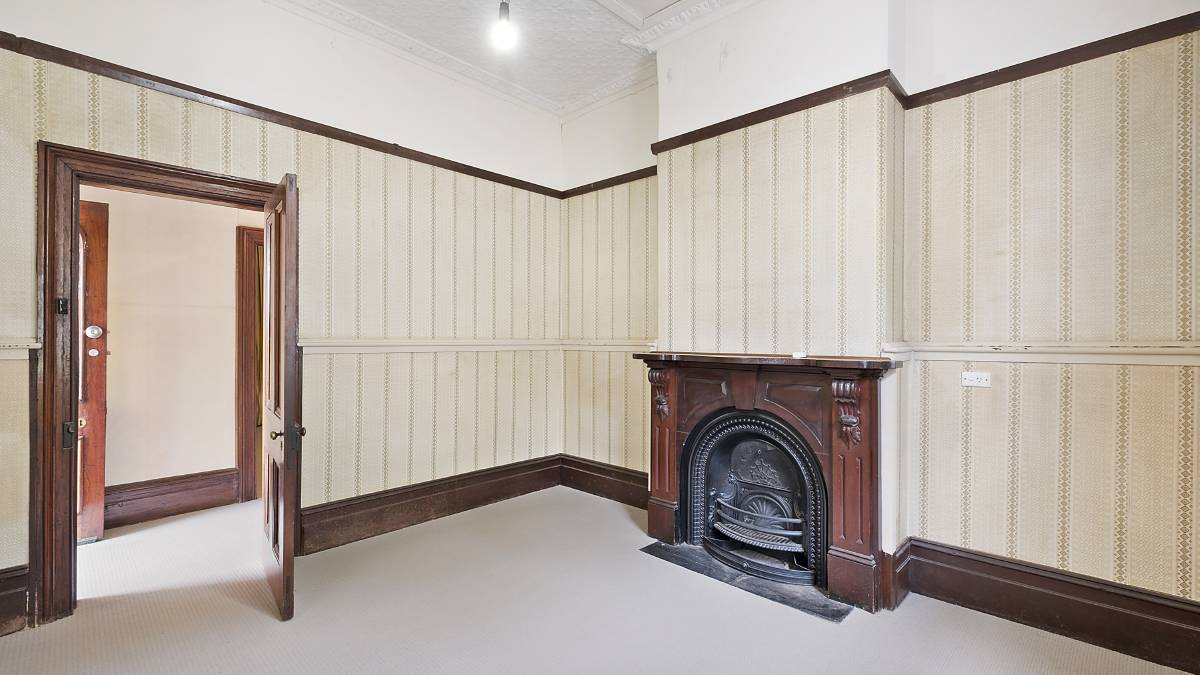
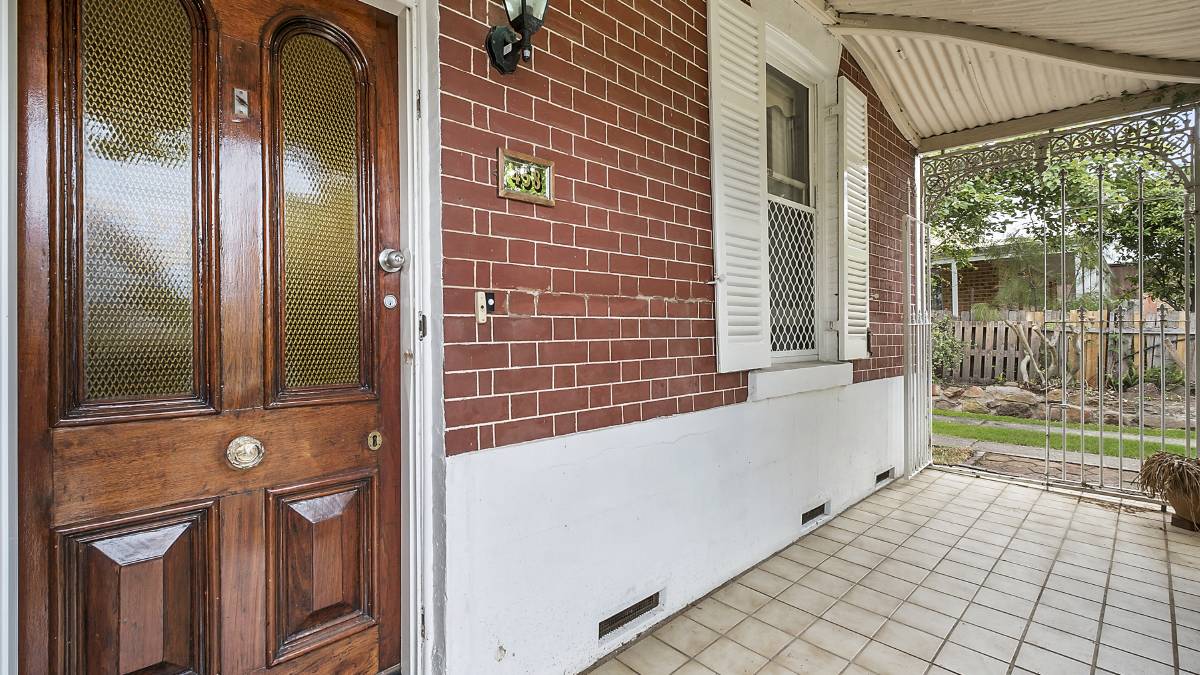
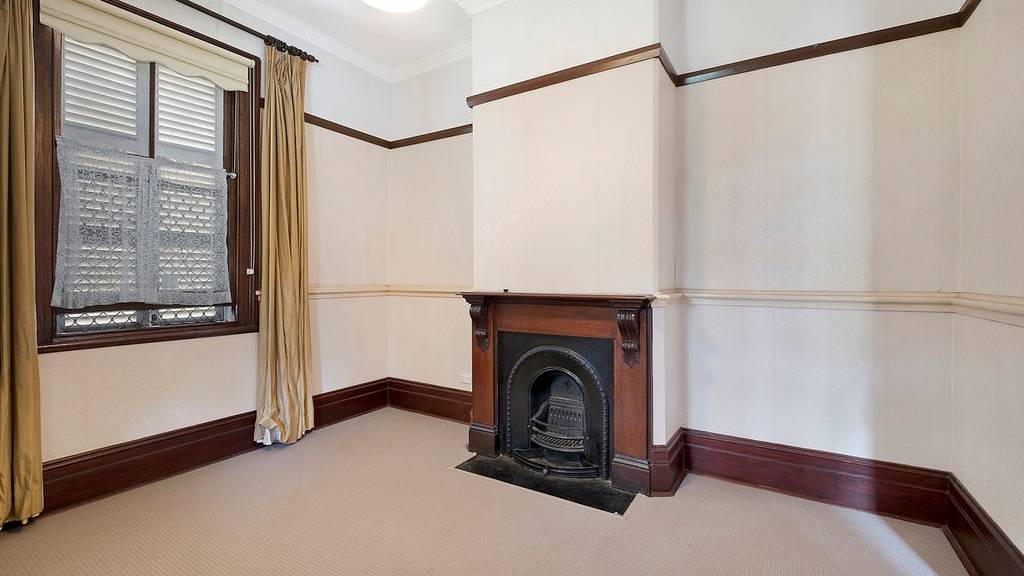
A further move was then made to Windsor, where they lived in the Gaol and Arthur Berkleman was the Acting Gaoler. After leaving this position he built a house in Windsor and named it "Balaclava". The house is still (1987) standing and although the name plate was removed some time ago the family name is still visible in the stone of the fireplace. He is later thought to have continued in business with a produce store.
Also provided by the family was a photograph of him in uniform. On the Certificate of Service for the N.S.W. Police, there is reproduced a picture of a "Mounted Trooper 1862-1910". This bears not the slightest resemblance to the photograph of him in uniform.
The family also possess a book entitled The Campaign in the Crimea, by William Simpson, which was published on the 27th of November 1855. The flyleaf is inscribed:
"Mrs. Newman begs Mr. Arthur Berckelman's acceptance of the 'Campaign in the Crimea' in which as one of 'the Gallant 600' in the Charge at Balaclava he bore so noble and distinguished a part.
Dromoi House, Mallow, Co. Cork, Ireland."
In 2005 it was learnt that his sword was being sold by an Australian Militaria dealer, said to have come via auction to the market.