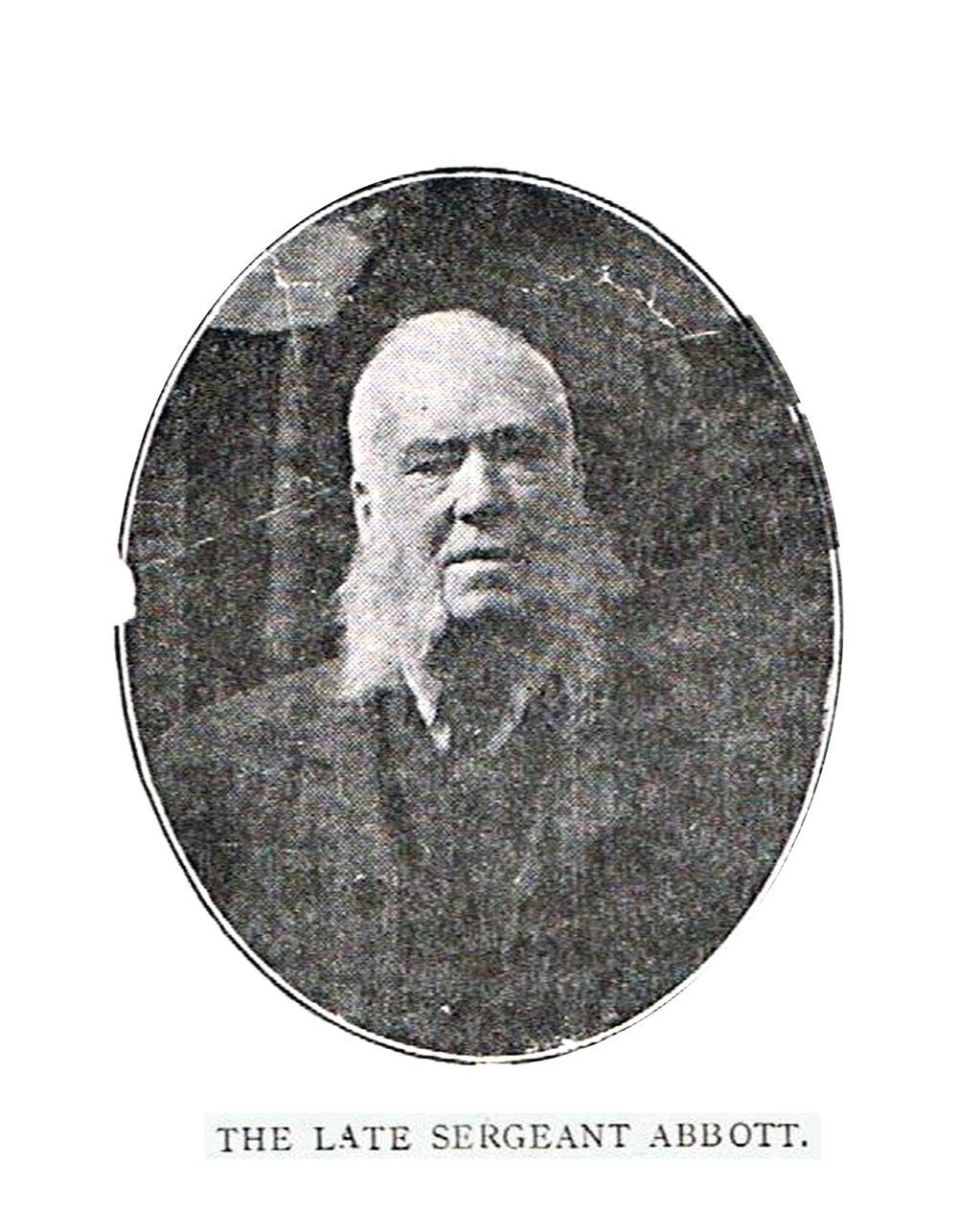
Born East Bergholt, Suffolk, c.1832.
Baptised in the parish church of St Mary the Virgin, 19th of February 1832, the son of Joseph Abbott, a labourer, and his wife Anne or Ann.
[PB: The England & Wales Christening Records, 1530—1906, say he was born 16 February 1832, and baptised on the 18th February 1832, in East Bergholt.]
1841 Census
Gaston Street, East Bergholt.
Ann Abbott, 38, Char Woman.
Two children shown: James 9, and Sarah Ann 7.
[PB: At enlistment in 1853, he gave his age as 18, which suggests he was born c.1835. But it seems likely he understated it then.]
Enlisted at London on the 17th of December 1853
Age: Given as 18 years, but his christening date suggests 21.
Height: 5' 7"
Trade: Labourer
His service record during 1854 implies that he could not have been at Balaclava.
He was sent to the Consolidated Cavalry Depot at Newbridge (when the regiment embarked for the Crimea) during the second week of May 1854, as one of a party of 5 officers and 72 men going from Dublin to Newbridge. He is noted as being a "Servant", but not to whom.
The relevant muster rolls in existence for this Depot are those for April/June/54, when he is shown as being present at the June muster, through to April/June of 1855, when he is still shown as being present.
He is next shown in the Regimental Muster rolls on Vouchers 8/9 No.1 Report, listing men who arrived in the Crimea with Captain Miller's draft.
No date of embarkation or arrival is shown, but Captain Miller is shown as being rationed on board ship, 3rd — 29th of July 1855, and as having joined the regiment on the 30th. From this it can be assumed that Abbott and the rest of the draft did too, as he is shown as being with the regiment when the muster of the 31st of July 1855 took place.
He is shown as present for the August muster but "In Hospital" for that of the 30th of September.
Further evidence that this was so comes from his drawing a 6d per day Field Allowance for 45 days but under stoppage of the Ration Allowance for 17 days when actually in hospital in September. This total of 62 days equals the total of days between the 30th of July — when it is presumed that he joined the regiment — and the 30th of September.
All this can only confirm that his only entitlement was the clasp for Sebastopol.
He was a further 14 days in hospital in October, but on the 6th of November 1855 he, together with a Sergeant, a Corporal and 19 other men, was sent to Ismid in Turkey to look after officers' chargers. Here they were attached to the 8th Hussars — and paid by them.
It could be that these horses belonged to officers of the 11th, as several of the former returned to England around this time on sick leave, including Captain Miller, who returned to England on the 20th of September, but rejoined the regiment on the 14th of March 1856.
He was back on the Regimental Pay Roll from the 19th of June 1856, the end of June muster showing him as being aboard the "Orinoco". Part of the regiment had embarked for England in June (but no date is shown), and the remainder on the 4th of July. Abbott was probably among the first lot.
Tried by a General Court-martial at Scutari on the 9th of February 1856 for "Breaking and escaping the Guard", and sentenced to imprisonment for 10 days with hard labour.
From Private to Corporal: 1st of May 1857.
Corporal to Sergeant: 6th of January 1858.
1861 Census
Fulwood Barracks, Preston.
J. Abbott, 26, unmarried, Sergeant 11th Hussars, born East Bergholt.
Discharged, "by claim, time expired", from York on the 17th of December 1865.
Conduct, "very good". In possession of one Good Conduct badge when promoted and now equal to two.
His parchment certificate of discharge is still in existence, now blurred and indistinct, together with a certificate of membership of the Masons (see below).
Entitled (according to the medal rolls) to the Crimean medal with the clasp for Sebastopol only, and the Turkish medal.
He was presented with a silver cup by the Sergeants' Mess of the Regiment on his retirement, and this is in the Sergeants' Mess of the now Royal Hussars.
Further evidence that he was not present at Balaclava comes from a letter from T.H. Roberts, dated 30th October 1911, to the Commanding Officer of the 11th Hussars, thanking him for a subscription to the Balaclava Fund of £25, and in which he also said:
"I am pleased to report that of the four XIth Survivors, all but D. Briers are in fairly good health. Spring, Holland and Parkinson were at the Annual Dinner. I have had an application today from yet another 11th (alleged) survivor named Abbot, whose claims I am enquiring into."
The results of Roberts's enquiries are not known, but they must have been negative.
There are also two letters from a "W. Turner, late Sergt. R.M.L.I.". The first was dated 3rd November 1913:
"They all say Abbot was not one of the Six Hundred. I say he was. Good old Abbot was true and faithful to his country all his life, and a credit to his corps and his family."
But the very next day, 4th November 1913, Turner sent off another letter:
"This morning I had a letter from Chelsea Hospital informing me that Sergeant Abbot was not in the Charge. 'My Hero is shattered' and I have been led astray by the evidence of his word, having met him in the Crimea, the long term of over 58 years, the possession of his medal with four bars and his discharge from the 11th Hussars. I loved him as a brother. How humbled I feel."
James Abbott is not known to have been a member of the Balaclava Commemoration Society in either 1877 or 1879, nor is he ever recorded as having attended any of the survivors' functions.
Joined the Coastguard Service in 1866, but went into the Prison Service circa 1869.
His service in the Coastguard has been difficult to follow. No consecutive record of service seems to have been recorded, hence it has been necessary to follow up previous and later service from any coastguard station records at any given date.
His first station on appointment was at Gibraltar Cliffs in the Whitstable Division, Kent, from the 20th of February 1866, although he does not appear to have served there for very long.
At this time he was shown as "Ex-11th Hussars", being appointed as a Private in the Mounted Guard. (A footnote added that his weight was 10 stone 11lbs.)
On the 26th of April 1866 he was transferred to the Sea Salter Cliffs station in the Salcombe Division, Devon. On the 15th of July 1867 he was promoted to Corporal and resigned from the service, as "Discharge requested. Recommended, Conduct, v. good", on the 31st of December 1868.
[PB: In the late 1860s JA worked at the Woking Invalid Convict Prison, Knaphill.
The Woking Invalid & Women's Prisons
In the mid-19th Century the Home Office purchased around 65 acres of land in Knaphill from the London Necropolis Company to build a special prison for disabled (mental/physical) convicts. It was designated 'The Woking Convict Prison' and was to be the first of its kind. Construction of the site began in 1859. It received its first officers and inmates a year later when they were transferred from Lewes, Carisbrooke and Dartmoor prisons. These male convicts helped construct it to reduce costs.
In 1869, one hundred females were transferred from Parkhurst on the Isle of Wight and employed on laundry, cooking, tailoring and other duties. By 1870 its population had grown to an average of 610 and included both male and female miscreants. An additional twenty acres of adjacent land was purchased and building was ongoing until 1892. The disabled wing was given over to the army in 1895 and converted to quarters for infantry troops. The female wing continued to be used until 1895 when, like all the male prisoners who had been transferred to other prisons earlier, the women were sent to Holloway in London.
Many of the inmates at the Knaphill Women's Prison were convicted of murdering their own children. Some were originally sentenced to death but then had their sentences commuted to life imprisonment...
[Source: http://www.theknaphillian.com/historyofknaphill.htm (accessed 3.3.2016).]
In 1903 the prison was converted into a barracks and re-named Inkerman barracks.]
It has not been possible to obtain any details of his Prison service, other than what is contained in Census Reports.
Marriage registered
James Abbott and Mary Grace Hannaford, at Plymouth in the June Quarter 1868.
1871 Census
11, Main Street, Woking.
James Abbott, 36, Assistant Warder at Woking Prison quarters, born East Bergholt, married to Mary Grace, 28, born Kingsbridge, Devon. A daughter, Annie, 2, and a son, James Ernest, 10 months, are shown.
[RM: He is known to have been a Mason at this time. A certificate exists for his membership of the St. John's Lodge, Knaphill, under the Grand Lodge of England, dated 22nd of November 1876 — 9th of September 1879 (see above). Knaphill is near Woking.]
1881 Census
11, Prison Street, Woking.
James Abbott, aged 45, a Warder, born at East Bergholt, Suffolk, with his wife, Mary G., 37, born at Kingsland, Devon.
A son and three daughters are also shown:
Annie, 12, Scholar, born Kingsbridge.
James E., 10, Scholar, Kingsbridge.
Clara, 8, Scholar, Woking.
Mary, 2 months, Woking.
1891 Census
Union Buildings, Anglesea Road, Portsea.
James Abbott, 55, Warder H.M. Convict Prison, born East Bergholt.
Mary G., 48.
Clara, 18, Dressmaker.
Mary, 10, Scholar.
Joseph, 8, Scholar.
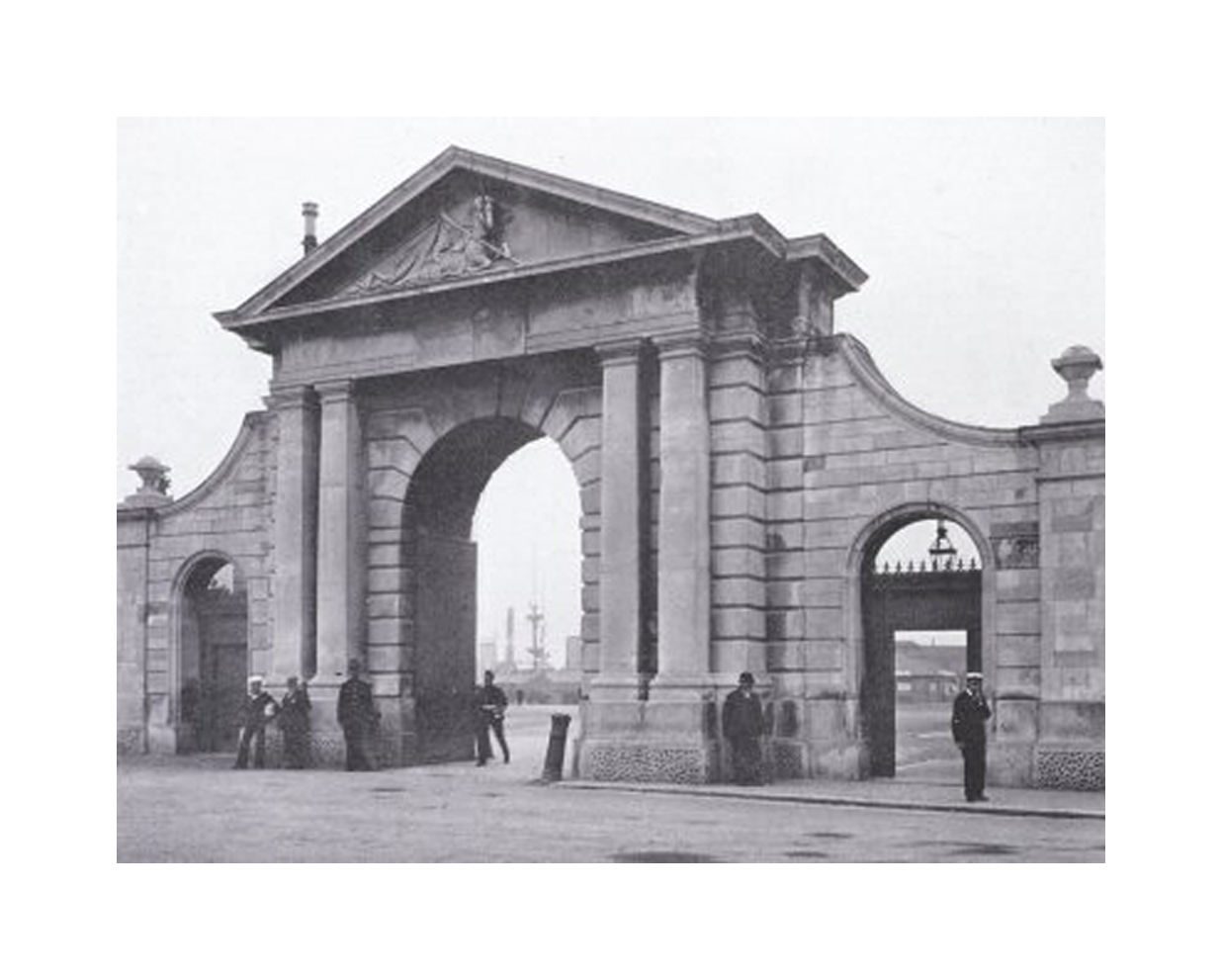
1891 Census
Unicorn Gate, Portsea Island
Warder, HM Convict Prison.
Believed to have been living at 132, Bath Road, Southsea.
[PB: Why was JA was in the Unicorn Gate on the night of the 1891 Census? The Unicorn Gate appears to have been the entrance to the Naval Dockyards, not the prison, see e.g.
[British Listed Buildings: Link]
[Battleships Cruisers: Link]
Retired on pension in 1894, after having been Principal Warden Gate-Keeper at Portsmouth Prison for many years.
Death registered
The death of his wife, Mary Grace, 52, was registered in the September Quarter of 1895 in Portsea.
1901 Census
31, Trevor Road, Portsmouth.
James Abbott, 69, widower, Pensioner with service, born East Bergholt.
Two children shown: Mary, 20, and Joseph, 18.
1911 Census
20, Trevor Road, Southsea.
James Abbott, 79, Widower, Principal Warder Convict Service, born East Bergholt.
[There is a photograph in the 11th Hussar file, to be uploaded.]
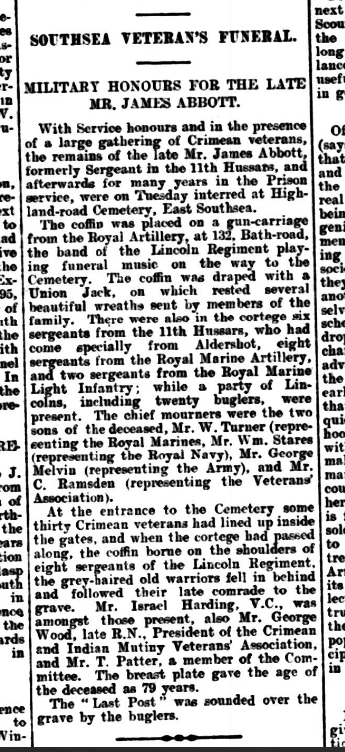
James Abbott died in the Workhouse Infirmary, Milton, 31st of October 1913, aged 84 years, and was buried in the Highland Road Cemetery at Portsmouth on the 4th of November 1913.
Death registered
James Abbott, aged 82 years, December Quarter 1913, Portsmouth.
[PB, Feb 2014: This must have been the Portsea Island Union Workhouse Infirmary, situated in Milton Street, Portsmouth. (It became known as St Mary's Hospital c.1930.) See also (http://www.institutions.org.uk/workhouses/england/hants/portsmouth_workhouse.htm (accessed 5.2.2014).]
He is said to have left a widow, who was blind. (However, he is described as a "widower" in the 1911 Census.)
Extract from the United Services Gazette, 13th of November 1913:
Another survivor of the famous charge of the Light Brigade on the 25th of October 1854 has just died in the person of James Abbott, late Sgt. of the 11th Hussars. Born in December of 1834, he enlisted on his 18th birthday into the 11th Hussars and went through the famous charge without sustaining any serious injury. He was equally fortunate in the other engagements in which he took part, Alma, Inkerman and Sebastopol.
At the conclusion of the war, although he had been in the service only three years, he was promoted to the rank of sergeant, and continued in that rank for nine years, when he took his discharge. He afterwards served for three years as a coastguard, and for twenty years as a warder at Portsmouth Prison, where he rose to the rank of Chief Warder.
Report from a contemporary newspaper (unknown source):
A Balaclava Hero
The funeral of the late veteran, J. Abbott, of the 11th Hussars, will take place at the Highland Road Cemetery at 2 p.m. tomorrow. The cortege will leave No. 132 Bath Road, Southsea, at 1.45 p.m. The deceased was one of the members of his regiment who actually charged with the Light Brigade at Balaclava. He was also present at the battles of the Alma, Inkerman and Sebastopol. All veterans are invited to attend, also members of both services, to show their respects to one who had served his country so well.
Crimean Veteran's Funeral
The funeral was an imposing sight, and the absence of a firing party was the only indication that the obsequies were not those of a man still serving. The cortege from Bath Road was headed by the band of the Lincoln Regiment and Sergeants of that regiment acted as pall-bearers. The coffin, of polished oak with brass fittings was borne on a gun-carriage horsed by the Royal Field Artillery and was covered with the Union Jack and surmounted by a large number of beautiful wreaths.
Behind the coffin marched a deputation of four sergeants of the 11th Hussars and a number of non-commissioned officers of the Royal Marine Artillery, one of whom carried a fine floral tribute. Other wreaths were sent by the 11th Hussars, the Veterans Relief Fund, and the Crimean and Indian Mutiny Veterans Association.
The private mourners were James and Joseph Abbott (sons) and ____ [illegible] Smith (son-in-law). A number of Crimean and Mutiny veterans were at the funeral and also Israel Harding, VC RN. The service was conducted by the Revd. Father O'Gorman Powers, of St. Matthew's Church, and at the grave-side the "Last Post" was sounded by buglers of the Lincolnshire Regiment. The funeral arrangements were carried out by Messrs G. Andrews and Son, of Kingston Crescent.
[PB: He is listed as "James Abbott d. 1913 — survivor of the Charge of the Light Brigade, 1854" on the Portsmouth City Council website (section devoted to the "History of Highland Road Cemetery: Listings and details of noteworthy graves"), at portsmouth.gov.uk/ext/community-and-environment/community/history-of-highland-road-cemetery.aspx (accessed 29.3.2015). JA is also mentioned on the Friends of Highland Road Cemetery website (accessed 1.3.2016), but his gravesite is not specifically located.]
Registrations of marriage and deaths, and Census information for 1841, 1901 & 1911, cutting from Hampshire Telegraph and additional information for 1891, kindly provided by Chris Poole.
For further information on Knaphill and Woking Invalid Convict Prison, with some striking maps, prints and photographs, see e.g.
http://www.theknaphillian.com/historyofknaphill.htm
http://www.wokingprison.blogspot.co.uk/
http://rhqrmp.org/rmp_pdfs/newsletters/inkerman_bks.pdf
It would be useful to clarify information about Portsmouth/Portsea prison – was there just one prison, or more? (I've seen references e.g. to "Kingston Prison, Portsmouth", "Portsea prison" etc. Are these the same?).
[BBC: Link]
[Portsmouth: Link]
[28DaysLater: Link]
NB: All of JA's Census addresses are within a small area.